
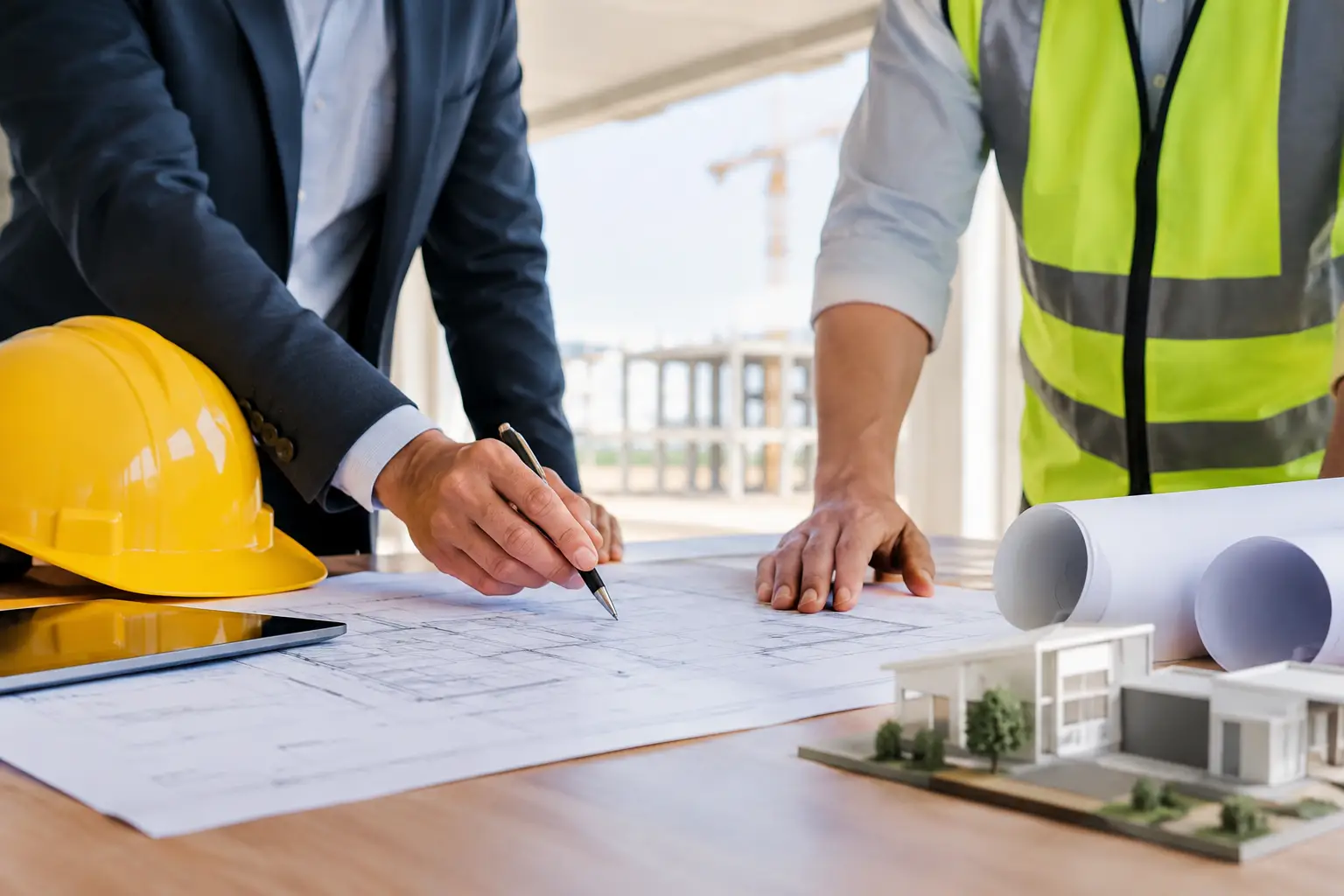
A luxury renovation can lose its magic quickly when a beautiful concept meets unclear pricing, delayed decisions, and a parade of separate contractors. The choice between design build vs traditional contracting shapes far more than the paperwork. It determines who owns the details, how quickly decisions move, and whether your finished space feels as considered in reality as it did in your first vision.
For a villa upgrade, apartment renovation, office fit-out, or bespoke kitchen, there is no universally correct route. The right model depends on how defined your scope is, how involved you want to be, and how much value you place on having one accountable team from concept to handover.
What design-build means for your project
Under a design-build model, one company leads the project from initial consultation through design, technical planning, procurement, construction, joinery, and final handover. The designers and execution team work within the same delivery structure, rather than being hired and managed as separate parties.
For the client, this creates a single point of responsibility. Instead of asking a designer whether a detail can be built, then asking a contractor what it will cost, then coordinating suppliers to protect the intended finish, you work with one team that resolves those questions together.
This does not mean design-build is less creative. Done well, it protects creativity by testing ideas against real dimensions, material availability, installation requirements, and budget from the beginning. A floating vanity, custom stone feature, concealed lighting detail, or full-height joinery wall is not simply drawn to look impressive. It is designed with the fabrication and installation process in mind.
At Aakruti, this integrated approach allows design direction and hands-on technical execution to move together. The objective is simple: create living works of art without asking the client to become the project manager.
How traditional contracting works
Traditional contracting separates the design phase from the construction phase. A client typically hires an architect or interior designer first, finalizes drawings and specifications, and then invites contractors to price and build the work. The designer may remain involved for site supervision, but the contractor is a separate appointment.
This route can work exceptionally well when the design has been fully developed before construction begins. It also gives clients the option to competitively tender a detailed scope, compare contractor prices, and select a builder independently.
The trade-off is coordination. If site conditions differ from the drawings, materials need to be substituted, or a design detail proves difficult to execute, the client may need the designer and contractor to agree on a solution. Each party has a distinct contract, scope, and commercial interest. That can be manageable with an experienced project manager, but it can also slow down decisions during a renovation.
Design build vs traditional contracting: the real differences
The biggest distinction is not whether one model is more premium than the other. It is how responsibility is organized when a project becomes complex.
Accountability and communication
With design-build, the same team is responsible for translating the vision into a completed environment. If a ceiling detail affects air-conditioning coordination, lighting placement, and joinery dimensions, that conversation happens internally. The client receives a clearer path to resolution and does not have to referee between design intent and site realities.
In traditional contracting, responsibility is divided. A designer may say the contractor did not follow the drawing. A contractor may say the drawing lacked technical detail or the client approved a change. Neither situation means the team is unprofessional, but the client must understand the boundaries between appointments and make sure someone is leading coordination.
For busy homeowners and business decision-makers, one accountable partner is often the most valuable part of design-build. Fewer voices does not mean fewer ideas. It means fewer loose ends.
Budget visibility
Traditional contracting is often chosen for price comparison. Once the drawings are complete, several contractors can provide quotations for the same scope. This can be useful, particularly for a straightforward project with detailed specifications and few unknowns.
However, the lowest initial quote is not always the lowest final cost. Quotes can differ because of assumptions, exclusions, allowances, and varying interpretations of the drawings. If the scope changes after work begins, variation costs can accumulate quickly. This is especially common in older properties, where hidden conditions may only appear after demolition.
A design-build partner can price alongside design development. That allows the team to identify budget pressure early and adjust the solution before it becomes expensive to change. Perhaps natural stone is reserved for the most visible surfaces while a complementary porcelain is used elsewhere. Perhaps a custom detail is refined to preserve its visual impact while simplifying fabrication. The point is not to dilute the vision. It is to make informed choices while they still have the greatest effect.
Speed and decision-making
A traditional sequence is usually linear: design first, tender second, build third. That structure offers clarity, but it can extend the overall timeline. Contractors cannot fully commit to pricing or procurement until the documents are ready, and construction starts only after selection and contracting are complete.
Design-build can overlap certain activities. Technical input can begin while the design is being refined, long-lead materials can be identified earlier, and procurement planning can support the construction schedule. This is particularly valuable for commercial spaces with a fixed opening date or homeowners coordinating a move.
Speed still depends on approvals, building requirements, material lead times, and the complexity of custom work. No delivery model can make these realities disappear. What design-build can do is reduce the handoffs that often create avoidable waiting periods.
Design integrity and craftsmanship
A beautiful rendering is only the beginning. The finished effect depends on junctions, proportions, hardware, lighting temperature, paint finish, stone selection, and the skill of the people installing every element.
In a traditional model, the designer may protect the concept through site visits and detailed documentation. This can be highly successful when the design team has strong technical oversight and the contractor has proven experience with premium finishes.
In a design-build model, craftsmanship is part of the design conversation from day one. Joinery workshops, site teams, and designers can coordinate the details that make a space feel intentional: shadow gaps that align, door reveals that remain consistent, cabinetry that accommodates appliances precisely, and lighting that enhances textures rather than flattening them.
For projects where bespoke joinery and layered finishes carry much of the character, this integration is a meaningful advantage.
When traditional contracting may be the better choice
Traditional contracting can be the right path when you already have a complete design package from a trusted architect or designer and want to select a contractor through a formal tender process. It may also suit projects with a tightly defined construction scope, an internal facilities or project team, and a client who wants direct control over each appointment.
It can offer useful independence between designer and builder. Some clients prefer this separation as an added check on quality and cost. The key is to appoint professionals who communicate well, define responsibilities clearly, and provide enough technical information before construction begins.
This model asks more of the client or their representative. Someone needs to manage decisions across the separate contracts, especially when changes arise. If that level of involvement feels comfortable, traditional contracting can provide flexibility and choice.
When design-build delivers more value
Design-build is often the stronger fit for clients who want a refined result without the burden of coordinating designers, contractors, trades, suppliers, and installers themselves. It is especially suited to full-home renovations, high-end kitchens, villa transformations, office fit-outs, and projects that rely on custom fabrication.
It also helps when the brief is ambitious but still evolving. You may know you want a warmer, more contemporary home, a client-facing office that communicates confidence, or a kitchen designed around how your family actually lives. A design-build team can turn that direction into a practical scope while keeping budget, functionality, and execution connected.
For Dubai projects, integrated delivery can be particularly reassuring where property management requirements, building access restrictions, site coordination, and approval processes influence the construction schedule. A team accustomed to managing the full journey can plan for these details rather than treating them as last-minute obstacles.
Questions to ask before choosing either route
Before signing an agreement, ask who is responsible for coordinating technical drawings, material selections, site changes, approvals, quality checks, and final defects. Ask how the budget is developed, what is included in the price, and how variations are documented and approved. You should also understand the proposed timeline, warranty coverage, and who will be your day-to-day contact.
For a design-build provider, ask to see how design decisions are translated into site execution. For a traditional setup, ask how the designer and contractor will communicate, who has authority when details conflict, and how often the work will be inspected.
The best answer is not a polished promise. It is a clear process that makes you feel informed without placing every technical decision on your shoulders.
A well-designed space should feel effortless when you live or work in it. Choose the delivery model that gives your vision the right balance of creative freedom, cost discipline, and expert accountability, then let the right team make every detail shine.