
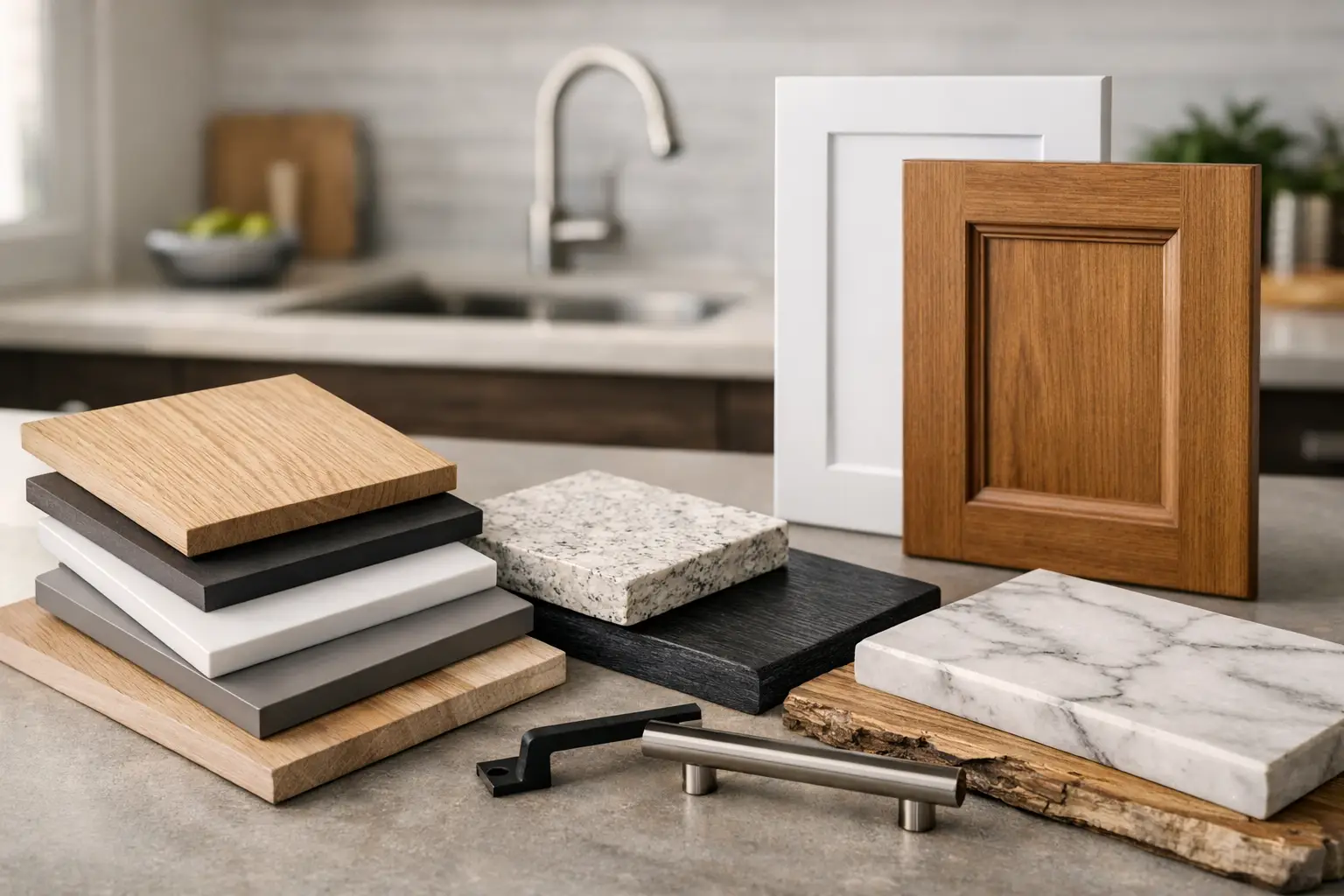
A kitchen can look flawless on handover day and still disappoint within a few years if its cabinetry was specified for appearance alone. The best materials for kitchen cabinets balance the finish you want with the realities behind the doors: heat, moisture, daily cleaning, heavy cookware, and the precision required for hardware to operate beautifully over time.
For a luxury kitchen, material selection is rarely a choice between one “best” board and another. Cabinet boxes, doors, drawer fronts, interior shelves, and decorative panels can each call for different materials. The right combination creates a kitchen that feels like a living work of art while performing with quiet, dependable strength.
How to choose the best materials for kitchen cabinets
Start with how the kitchen will be used. A family kitchen with frequent cooking needs durable surfaces, reliable edge sealing, and a cabinet structure that can carry substantial loads. A design-led entertaining kitchen may prioritize flawless lacquer, book-matched veneer, or framed solid-wood detailing. Rental and investment properties often benefit from durable, easy-to-replace finishes that maintain their appeal between tenants.
Then consider the cabinet component. The carcass, or cabinet box, needs stability and screw-holding strength. Doors need a smooth, attractive face that suits the chosen finish. Shelves need rigidity. These requirements are different, which is why well-designed joinery does not treat every part of a cabinet as interchangeable.
In Dubai, air conditioning keeps interiors comfortable, but kitchens still experience humidity changes, steam, and intense temperature differences near balconies or exterior walls. Quality fabrication, proper installation, moisture-resistant boards where appropriate, and carefully sealed edges matter as much as the material named on a sample.
Plywood: the dependable choice for cabinet carcasses
Plywood is often one of the strongest options for kitchen cabinet boxes. It is made from layered wood veneers arranged with alternating grain directions, giving it impressive dimensional stability and good screw-holding ability. Quality plywood performs particularly well for base cabinets, wall cabinets, tall units, and drawer construction.
Its strength makes it a sensible foundation for stone countertops, pull-out pantry systems, integrated appliances, and heavily loaded drawers. It can be finished with veneer, laminate, paint systems, or other surface materials, offering flexibility without sacrificing structure.
Not all plywood is equal. The grade, core quality, adhesive, thickness, and moisture resistance affect its performance. A low-grade sheet with voids inside the core can weaken fixings and create uneven surfaces. For refined joinery, the specification should identify the board quality rather than simply labeling every sheet “plywood.”
Plywood does cost more than particleboard or standard MDF. For many projects, that investment is most valuable in the cabinet carcasses and structural elements, where its durability is felt every day but not necessarily seen.
Where plywood makes the most sense
Choose plywood when long-term strength is a priority, especially for large drawers, sink units, pantries, and cabinets supporting premium worktops. It is also a strong choice where clients want confidence that their kitchen joinery is built for years of use rather than only for visual impact.
MDF: ideal for painted and sculpted cabinet doors
Medium-density fiberboard, commonly called MDF, is made from fine wood fibers pressed into smooth, dense panels. Its uniform face and clean machined edges make it an excellent material for painted kitchen doors, especially shaker profiles, routed details, fluted panels, and contemporary slab fronts.
Because MDF has no visible grain, a professionally applied paint or lacquer finish can look exceptionally even. This makes it a favorite for kitchens in soft neutrals, deep charcoals, rich greens, or custom colors matched to the wider interior scheme. It supports precise detailing that can make simple cabinetry feel tailored and architectural.
Its limitation is moisture. Standard MDF can swell if water reaches an unprotected edge, joint, or drilled opening. Moisture-resistant MDF offers better performance, but it is not waterproof. Sink cabinets, dishwasher-adjacent panels, and areas around plumbing need thoughtful detailing, sealed cutouts, and prompt attention to leaks.
MDF is also heavy. Large doors require correctly specified hinges and careful alignment. In the right application, however, it delivers a refined painted finish at a more manageable cost than solid wood.
Solid wood: character, warmth, and a higher level of care
Solid wood brings natural depth that manufactured boards cannot duplicate. Oak, walnut, ash, maple, and teak each have their own grain, tone, and personality. It is especially compelling for framed doors, open shelving, slatted features, drawer fronts, and statement islands where texture is part of the design story.
A solid-wood kitchen does require nuance. Wood expands and contracts with changes in humidity, so wide solid panels must be constructed to accommodate movement. A quality joinery workshop understands this through grain direction, panel construction, seasoning, and appropriate finishing methods. Without that discipline, wood can warp, split, or develop uneven gaps.
Solid wood is also a premium choice in both material and craftsmanship. It can be repaired and refinished, which gives it a long life, but it may show dents, marks, and natural color variation over time. For homeowners who value a kitchen that gains character rather than staying perfectly uniform, that is part of its appeal.
A balanced approach often works best: use solid wood where it will be seen and appreciated, then use engineered boards for stable internal construction.
Wood veneer: the luxury look with better stability
Wood veneer is a thin layer of real timber applied to a stable substrate, often MDF or plywood. It offers the warmth and authenticity of natural wood while allowing larger, more consistent panels than solid timber may permit. Veneer is particularly effective for sleek full-height cabinets, integrated appliance panels, and expansive island cladding.
The quality of veneer work is revealed in the details. Grain can be slip-matched, book-matched, or sequenced across adjacent doors to create a deliberate visual rhythm. Edges must be finished cleanly, and the protective topcoat should suit the kitchen environment. A beautiful walnut veneer can feel calm and contemporary, while a wire-brushed oak veneer introduces texture and softness.
Veneer should not be mistaken for laminate printed with a wood pattern. It is real wood, so variation is expected. That variation is exactly what gives a well-designed kitchen its depth.
Laminate: practical durability with broad design freedom
High-pressure laminate and other quality decorative laminates are valued for their durability, consistency, and wide range of colors and textures. They can replicate stone, concrete, textile, metal, and timber looks while providing a surface that is generally easy to clean and resistant to everyday scratches.
Laminate is a practical option for cabinet doors, internal cabinetry, utility kitchens, and high-use family spaces. It also provides dependable color consistency across a larger project, which can be useful when cabinetry extends into a pantry, laundry, or adjacent living area.
The weak point is often the edge treatment. Poorly applied edging can lift over time, allowing moisture to enter the board beneath. Premium joinery depends on accurate cutting, strong bonding, and well-finished corners. Matte laminates can look wonderfully sophisticated, but some may show fingerprints more readily than textured or mid-sheen finishes.
Acrylic and lacquer: for a crisp contemporary finish
Acrylic-faced panels create a polished, contemporary look with excellent color clarity. High-gloss acrylic reflects light and can make compact kitchens feel larger, while super-matte acrylic offers a velvety, modern surface. Many premium options include improved fingerprint resistance, which is useful on handleless doors.
Lacquered doors, often made from MDF, provide greater freedom for custom colors and edge profiles. They can be finished in gloss, satin, or matte sheens and are well suited to a fully tailored design concept. Lacquer has a more artisanal feel than a factory-faced panel, but the finish quality depends heavily on preparation and application.
Both options deserve care around sharp impacts. A repairable painted finish may be preferable for some clients, while acrylic can offer greater surface consistency. The choice comes down to the desired look, maintenance expectations, and how the kitchen will be used.
Materials to approach carefully
Particleboard can be a cost-effective substrate for laminate-faced cabinetry, and quality versions have a place in controlled, dry interior applications. However, it has less screw-holding strength than plywood and is more vulnerable to swelling if moisture penetrates the surface or edges. It is not the first choice for demanding sink cabinets, heavy pull-outs, or joinery expected to endure intensive use.
Thermofoil, or vinyl-wrapped MDF, can create an affordable smooth door, but heat and edge durability can be concerns near ovens, dishwashers, and high-steam zones. It may suit a budget-conscious project, yet it does not usually offer the longevity or refined repair options expected in a bespoke luxury kitchen.
Build the kitchen around the material, not just the sample
The most successful kitchens combine materials with purpose: a plywood carcass for strength, moisture-resistant MDF for painted profiles, veneer for warmth, and durable laminate for hardworking interiors. Hardware, ventilation, edge sealing, countertop detailing, and installation accuracy complete the equation.
Before approving a finish, ask to see it in the actual lighting of your home, alongside the countertop, flooring, and wall color. Touch the surface, open the drawer, and look closely at the edges. The right cabinet material should not only photograph beautifully. It should make daily life feel easier, calmer, and made for you.





Customer Reviews
[834029]supplies professional anti-violence equipments and solutions for the whole world with strong and perfect production capacity. anti-violence.org
[…] this can mean that the person discussing your preferred kitchen finish also understands the cabinet construction, ventilation needs, appliance cutouts, and installation sequence. For a business owner, it means […]
[…] modern cabinetry is built around engineered boards such as MDF, plywood, particleboard, or laminated panels. These materials can perform beautifully, but their cut edges need protection. […]
[…] strong kitchen design does not select a countertop in isolation. It coordinates the surface with cabinet color, hardware, flooring, lighting, and the proportions of the room. That is where vision meets […]