
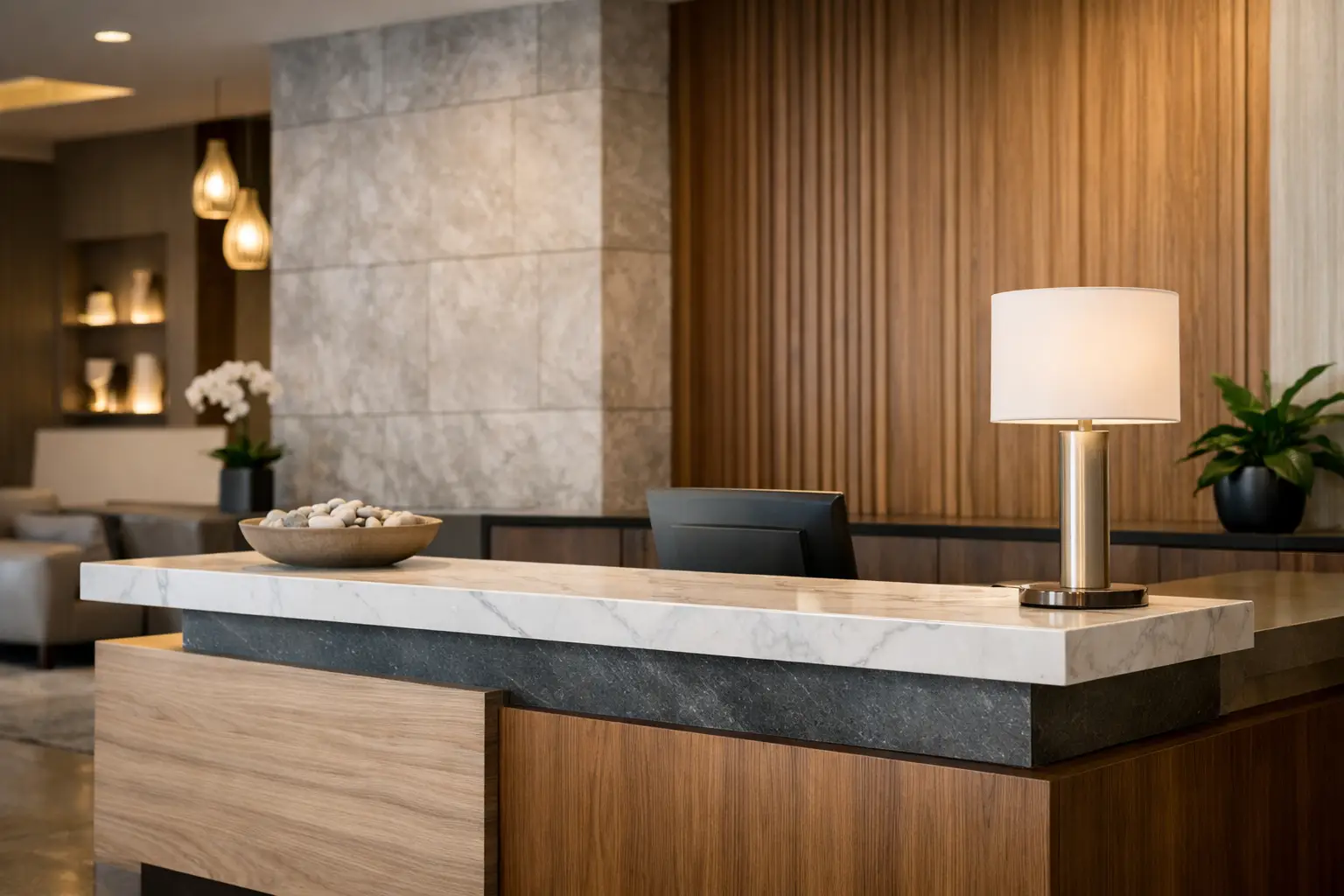
A reception area has only a few seconds to set expectations. Before a visitor speaks to a receptionist, notices the service offering, or enters a meeting room, they have already registered the floor beneath them, the texture of the desk, the quality of the lighting, and the care behind the details. The best finishes for reception areas do more than look impressive on opening day. They hold their character through constant use while expressing the confidence of the business behind them.
For offices, clinics, hospitality spaces, showrooms, and residential towers, the right specification is a balance of visual impact, maintenance needs, safety, and budget. A finish that is beautiful but easily scratched can quickly undermine the experience. Equally, a purely practical solution can make an arrival space feel generic. The goal is a composed material palette where vision meets craftsmanship and every surface has a purpose.
Start With How the Reception Area Is Used
There is no single luxury finish that works for every front-of-house environment. A corporate office lobby may need a calm, polished backdrop for daily client meetings. A medical reception needs easily cleanable, low-glare surfaces that feel reassuring rather than clinical. A high-end retail or hospitality setting can support more expressive stone, metal, and feature lighting, provided the materials can withstand busy foot traffic.
Begin by considering the volume and behavior of visitors. Are people rolling luggage, moving packages, waiting with children, carrying coffee, or checking in repeatedly throughout the day? Is the desk staffed continuously? Does the space receive direct sunlight? These questions shape the specification more reliably than a mood board alone.
In Dubai, entrance areas also face fine dust, intense daylight, and frequent transitions between outdoor heat and heavily air-conditioned interiors. Finishes should be selected with these practical conditions in mind. Matte and textured materials often conceal light dust and fingerprints better than highly reflective surfaces, while stable materials and careful installation details help preserve a crisp appearance over time.
Best Finishes for Reception Areas: Floors First
Flooring takes the greatest daily impact, so it should anchor the design strategy. It must support the look of the reception while offering slip resistance, easy cleaning, and a realistic lifecycle cost.
Porcelain Tile for Controlled Luxury
Large-format porcelain is one of the most dependable choices for commercial reception floors. It can recreate the visual depth of natural stone, concrete, wood, or terrazzo while offering excellent stain resistance and straightforward maintenance. A high-quality porcelain tile with a honed or matte finish feels sophisticated without showing every footprint.
The trade-off is installation quality. Poorly aligned large-format tiles, uneven joints, or careless edge detailing are immediately visible in an open lobby. Select appropriate grout colors, use minimal but practical joint widths, and plan movement joints properly. For a more elevated result, porcelain can be paired with a contrasting stone inlay at the entrance or beneath the reception desk.
Natural Stone for a Distinctive Arrival
Marble, travertine, limestone, and granite create an unmistakable sense of permanence. Every slab has its own veining and tonal variation, allowing a reception floor to feel like a living work of art rather than a repeated pattern. Stone is particularly effective in executive lobbies, luxury residential buildings, and client-facing professional environments.
Yet natural stone needs informed care. Softer or more porous varieties can stain or etch, especially near coffee stations and main entrances. A polished finish can also become slippery when wet and may reveal scratches more readily. Honed stone, suitable sealing, entry mats, and a maintenance plan usually provide a more practical long-term solution than selecting stone solely for its sheen.
Terrazzo for Character and Endurance
Terrazzo offers color, texture, and exceptional durability. Its aggregate can be tailored to complement a company palette, joinery tone, or architectural concept, making it ideal for organizations that want something distinctive without relying on decorative clutter. It works especially well in large, active reception zones because it disguises day-to-day wear gracefully.
Terrazzo requires skilled fabrication and installation, and its initial cost can be higher than standard tile. However, its longevity often makes it a sound investment. Use it as a full floor finish for a bold architectural statement, or limit it to a feature field framed by porcelain for a more measured budget.
Reception Desks Need a Layered Material Approach
The desk is the focal point of most reception areas, but it is also a working surface. It must accommodate staff ergonomics, concealed wiring, storage, accessible counter heights, and frequent contact with bags, documents, and devices. The strongest designs treat the desk as a composition of materials rather than one uninterrupted finish.
For the guest-facing façade, book-matched marble, fluted timber, ribbed glass, microcement, lacquered panels, or brushed metal can establish a memorable identity. Timber veneer brings warmth and softens spaces dominated by glass and stone. Choose a durable, high-quality veneer with carefully considered grain direction, especially across large joinery panels. A darker stain can feel dramatic, but mid-tone oak, walnut, and smoked finishes tend to remain timeless.
For transaction counters, engineered quartz or sintered stone provides a refined appearance with better resistance to staining and everyday knocks than many natural stones. Solid-surface materials are another smart option when an uninterrupted, curved, or integrated design is desired. They can be repaired more easily than some alternatives, although darker solid colors may show scratches over time.
Metal should be used with intention. Brushed stainless steel, bronze-tone finishes, champagne anodized aluminum, and powder-coated steel add precision and contrast. Avoid specifying delicate mirrored metals in high-touch locations unless cleaning staff can maintain them consistently. Fingerprints and fine scratches can quickly turn a glamorous feature into a maintenance concern.
Walls Should Create Depth Without Becoming Fragile
Reception walls have the power to frame a brand story, conceal technical elements, and make a modest footprint feel more considered. The best wall finish depends on whether the surface is a background, a feature, or a high-contact zone.
Paint remains valuable when specified well. A premium washable matte paint provides a quiet foundation for art, signage, or architectural lighting. It is economical to refresh and works beautifully with richer materials elsewhere. In narrow or busy spaces, however, painted corners and lower wall sections may need protective detailing to prevent scuffs.
Timber paneling or veneer creates warmth, acoustic softness, and a sense of bespoke craftsmanship. Fluted panels add shadow and rhythm, while flat panels can achieve a restrained contemporary look. Consider durable laminate or veneer-backed panels at areas vulnerable to bags and chair contact, reserving more delicate details for higher sections of the wall.
Stone cladding is compelling behind a reception desk, particularly when the slab selection and lighting reveal its natural movement. It should not be overused. One well-proportioned stone feature can feel exceptional; covering every wall in the same material may make the space visually heavy. Microcement and textured mineral finishes offer an alternative for brands seeking a softer, more architectural surface with fewer joints.
Use Lighting to Make Finishes Read Correctly
Even expensive finishes can disappoint under poor lighting. A stone that looks warm in a sample may appear gray under cool lighting, while metallic details can look flat without grazing light or careful reflection control. Material selection and lighting design should happen together, not in separate stages.
Use layered lighting. General illumination keeps the space comfortable and functional, while concealed LED strips, wall washers, pendants, or focused downlights draw attention to texture and reception signage. Warm-neutral color temperatures often flatter timber, stone, and skin tones in hospitality-oriented spaces. More neutral white light can suit clinical or highly contemporary environments, but excessive coolness can make a reception feel unwelcoming.
Glare is another practical issue. Avoid placing strong downlights directly above glossy desk surfaces or visitor seating. Test reflective materials from the guest’s eye level, especially when a glass façade introduces daylight. The most successful reception designs look polished at 9 a.m., 3 p.m., and after dark.
Balance Luxury With Maintenance From Day One
A refined reception area does not need the most expensive finish on every surface. It needs the right finish in the right place. Put investment into the materials visitors touch, walk on, and see directly on arrival: flooring, the desk façade, the principal feature wall, door hardware, and lighting details. Use durable supporting finishes in secondary zones, staff-facing areas, and surfaces that will be regularly replaced or repainted.
Ask for full-size samples and review them under the actual site lighting. Confirm edge profiles, grout lines, sealants, transition strips, and access panels before installation begins. These small decisions separate a design that merely photographs well from one that performs beautifully for years.
A thoughtfully planned reception does more than welcome people. It gives them a quiet reason to trust what happens next. When materials, craftsmanship, and operational needs are coordinated from the start, the result feels effortless – and that is precisely the impression every arrival space should leave.