
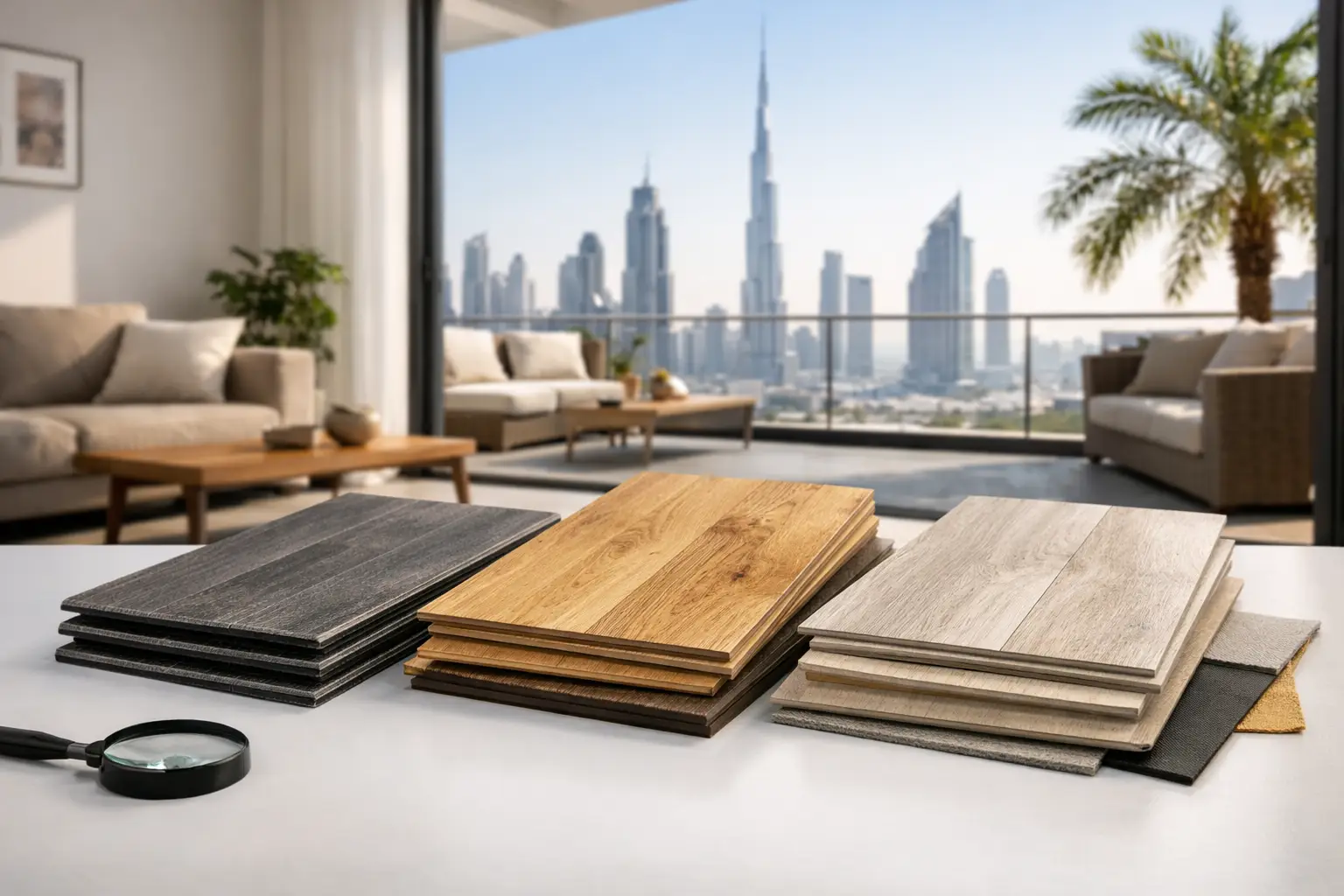
A beautiful floor has to do more than photograph well. In Dubai, it must stand up to sand at the entry, strong air conditioning, busy family life, and the daily pace of a polished home or workplace. When comparing LVT vs SPC vs WPC flooring, the right answer is not simply the most expensive option. It is the material that supports how the space will be used, feels right underfoot, and complements the wider design vision.
First, understand what separates these materials
LVT means luxury vinyl tile or luxury vinyl plank. It is the broad category behind many realistic wood- and stone-look vinyl floors. Traditional LVT is usually flexible and may be glued directly to a properly prepared subfloor. It is valued for its slim profile, detailed visual finish, and ability to create refined patterns such as herringbone.
SPC and WPC are both rigid-core vinyl flooring types. SPC has a stone polymer composite core, making it dense, stable, and highly resistant to indentation. WPC has a wood polymer composite core, which is thicker and more cushioned underfoot. Neither should be confused with solid wood flooring, despite WPC’s name.
All three can offer a water-resistant or waterproof vinyl surface. That does not mean every installation is protected from every moisture issue. Water can still reach the subfloor through edges, gaps, failed sealants, or poorly finished wet-area transitions. Correct specification and installation matter as much as the plank itself.
LVT vs SPC vs WPC flooring: the real differences
LVT is often the most design-flexible choice. Because it can be installed in slim, glue-down formats, it works especially well where floor height is limited or where a custom layout is central to the concept. Think of a sophisticated apartment renovation where a warm oak herringbone floor continues from the living area into a study. Its softer construction is comfortable, but it depends heavily on a smooth, well-prepared subfloor and can show dents more readily under concentrated weight.
SPC is the practical performer for demanding spaces. Its rigid core handles daily traffic, dining chairs, office seating, and active households well. It is also a sensible option where the existing subfloor has minor imperfections, although major unevenness still needs correction. The trade-off is feel: SPC is firmer and can sound harder underfoot without a quality underlay or acoustic treatment.
WPC places comfort first. Its thicker, softer core creates a quieter and warmer walking experience than SPC, making it appealing for bedrooms, lounges, and family living spaces. It offers a forgiving feel that works beautifully in homes where people spend long hours barefoot. However, its softer core can be less suitable for very heavy furniture, rolling office chairs, or commercial areas with intensive traffic unless the selected product is specifically rated for that use.
Choose by room, not by trend
For villas and apartments, LVT can bring a tailored, premium look to formal living rooms, dressing areas, and low- to moderate-traffic zones. SPC is often the better all-rounder for kitchens, corridors, children’s rooms, and rental properties where durability and easy care are priorities. WPC suits bedrooms, private lounges, and spaces where comfort and acoustic calm shape the experience.
For commercial interiors, the decision should begin with operations. A boutique office, retail space, or hospitality setting may benefit from SPC’s resilience, especially where chairs, luggage, foot traffic, or frequent cleaning are expected. A quieter executive suite may justify WPC if the traffic level is controlled. Glue-down LVT can be an excellent fit for commercial projects requiring precise patterns, easy plank-by-plank repairs, and a lower overall floor buildup.
Bathrooms, shower rooms, and other continuously wet locations need special care. Vinyl flooring may be appropriate in some dry or low-splash areas, but waterproofing, drainage, transitions, and manufacturer guidance should determine the final specification. A beautiful material should never be asked to solve a construction-detail problem.
What to check before approving a floor
The wear layer deserves more attention than the color sample. This transparent top layer helps protect the printed design from scratches and wear. Heavier residential and commercial use generally calls for a more substantial wear layer, but product quality is not defined by one number alone. The protective coating, locking system, core construction, warranty terms, and installation method all matter.
Also assess the finish in the actual light of the room. A pale oak that feels calm in a showroom can appear cooler beneath strong daylight, while a dark plank may reveal dust more quickly in a high-traffic entry. Request full-size samples and view them beside joinery, wall finishes, and upholstery. Flooring is the visual foundation of the room, not a last-minute surface choice.
Acoustics and floor preparation should be agreed upon before work begins. In apartments, building regulations or management requirements may call for acoustic underlay. In renovations, doors, skirting, kitchen plinths, and transitions to marble or tile must be measured around the selected floor thickness. These are small decisions on paper that define whether the final result feels intentional.
At Aakruti, flooring is considered alongside the complete interior – the joinery lines, lighting temperature, furniture plan, and the practical movement of the space. The best choice is the one that protects your investment while making the room feel effortlessly complete. Bring samples into the space, ask how the floor will perform in its specific zone, and choose the finish that still feels right after the first busy week of real life.