A beautiful home is not created by filling it with expensive pieces. It is created when every finish, proportion, and practical detail works together. Transform your home with the modern interior design tips below to create a space that feels refined, personal, and effortless to live in – whether you are updating a Dubai apartment, renovating a villa, or planning a complete fit-out.
Transform Your Home With Modern Interior Design Tips That Start With Purpose
Modern interiors are often mistaken for plain interiors. In reality, the best modern spaces are edited, intentional, and deeply comfortable. Before selecting a sofa or tile, define how each room needs to perform. A formal living room may need elegant entertaining zones, while a family room needs durable fabrics, concealed storage, and clear circulation.
Start with the daily reality of the home. Consider who uses the space, what needs to be stored, where natural light enters, and which routines currently feel inconvenient. This early thinking prevents a common renovation mistake: investing in attractive finishes while leaving awkward layouts and insufficient storage unresolved.
For open-plan homes, create distinction without closing rooms off. A change in flooring, a custom joinery feature, a rug, or thoughtfully placed lighting can define dining, lounging, and work areas while preserving an airy feel. The goal is not to make every corner match perfectly. It is to give the entire home a clear visual rhythm.
Build a Calm, Layered Material Palette
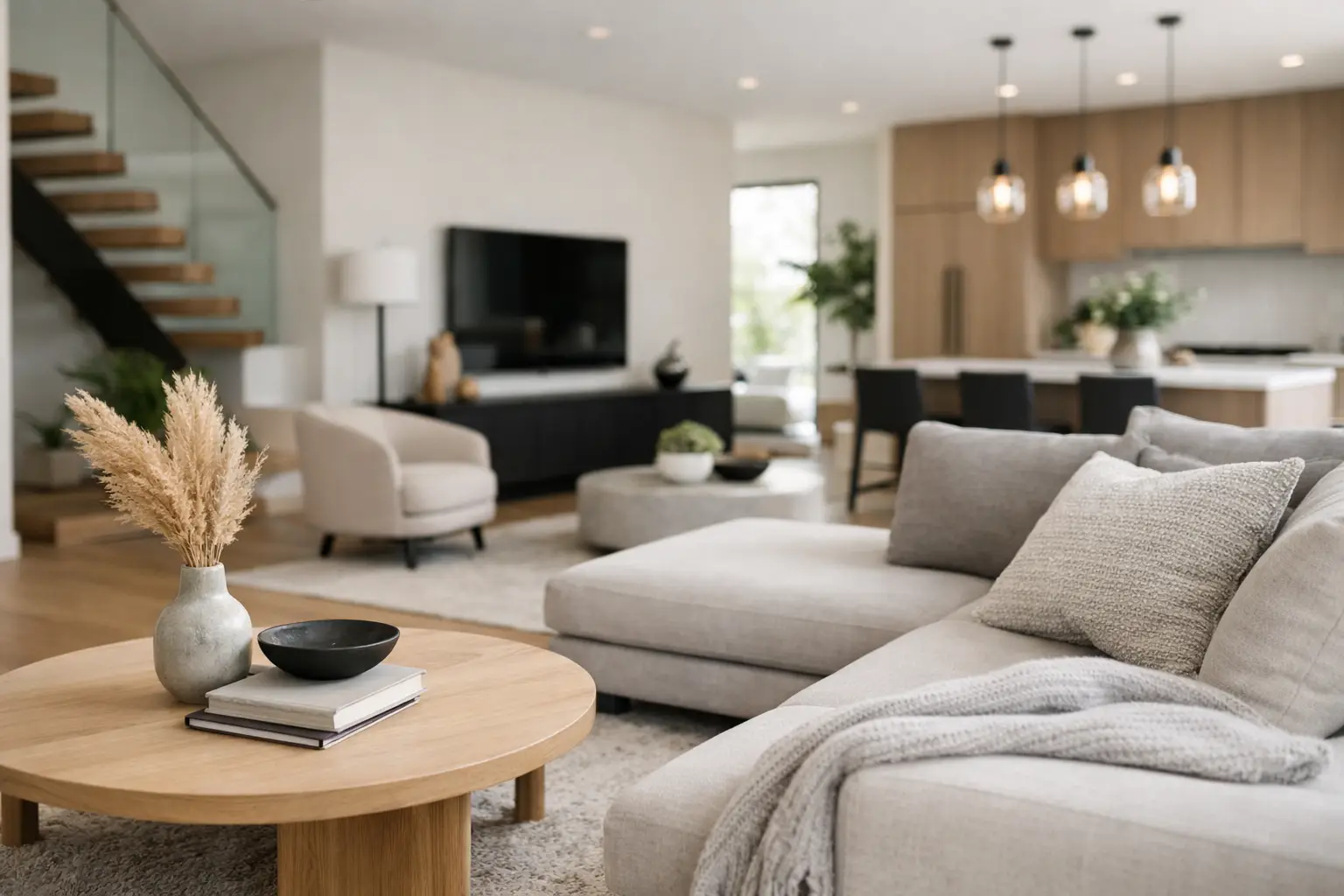
Modern luxury comes from restraint and contrast. Choose a focused base palette, then layer it with materials that have depth: warm timber, natural stone, textured wall finishes, brushed metal, linen, or boucle upholstery. These elements keep a neutral scheme from feeling cold or unfinished.
In the UAE, material selection also needs to suit the environment and lifestyle. Pale stone-look porcelain can offer a polished look with easier maintenance than natural marble in busy areas. Performance fabrics are often the wiser choice for homes with children, pets, or frequent guests. In kitchens, a beautiful worktop must also withstand heat, staining, and daily use.
Avoid applying one finish everywhere. If floors, walls, cabinetry, and furniture all share the same tone and texture, the result can feel flat. Balance sleek surfaces with tactile ones, and pair cooler materials with warmer accents. A fluted timber panel, for example, can soften a contemporary stone wall while adding architectural character.
Let Lighting Do More Than Brighten a Room
Lighting is one of the fastest ways to make a home feel considered. Relying on a single central fixture creates harsh shadows and leaves a room visually incomplete. A modern lighting plan uses layers: ambient lighting for overall illumination, task lighting where work happens, and accent lighting to draw attention to art, joinery, or textured surfaces.
Use dimmers in living rooms, bedrooms, and dining spaces to adapt the mood throughout the day. Warm lighting generally creates a more inviting residential atmosphere, while focused lighting is useful at kitchen counters, vanities, and study desks. Concealed LED strips under cabinetry or within shelving can add a quiet sense of luxury when used selectively.
Prioritize Custom Storage and Bespoke Joinery
Clutter is the enemy of a polished modern interior. Well-designed storage is not an afterthought; it is part of the architecture of the room. Bespoke joinery can turn an unused wall into a streamlined media unit, create a compact home office, or make an entryway more functional with concealed shoe and bag storage.
In bedrooms, full-height wardrobes create a cleaner silhouette and make better use of vertical space. In kitchens, internal organizers, pull-out pantries, and appliance garages keep worktops clear without sacrificing convenience. The best joinery looks simple on the outside because the technical planning happens inside.
This is where proportions matter. Cabinets that are too deep, handles that interrupt the composition, or shelves placed without regard to what will sit on them can weaken an otherwise strong design. Detailed drawings, material samples, and site measurements help ensure that the final installation looks as good as the original concept.
Choose Statement Pieces With Discipline
Every room benefits from a focal point, but it does not need five. It may be a sculptural pendant above the dining table, a large artwork, a dramatic stone feature, or a beautifully tailored sofa. Let that feature lead, then allow supporting elements to remain quieter.
Scale is equally important. A small rug under oversized furniture makes a living room feel disjointed, while too many small accessories can make a generous space feel crowded. Select fewer, better pieces that suit the dimensions of the room and leave enough breathing space around them.
Personal details still belong in a modern home. Display meaningful art, collected objects, and family pieces with intention rather than filling every surface. The result feels lived-in and individual, not staged.
Treat Renovation as a Managed Design Process
A successful transformation depends on more than a strong design idea. It requires coordinated planning between designers, contractors, suppliers, and specialist trades. Confirm the scope before work begins, including demolition, electrical changes, HVAC requirements, finishes, joinery, furniture, and final styling. This gives the budget and timeline a realistic foundation.
For major renovations, professional site coordination protects both design quality and daily peace of mind. Aakruti Technical Services Co. brings design, fit-out, bespoke joinery, and project management under one accountable process, helping clients move from concept to handover with greater clarity.
Your home should reflect your taste, support your routines, and retain its appeal long after a trend has passed. Start with a plan, invest in craftsmanship where it matters most, and let each decision serve the way you want to live.