A beautiful window is only as good as the detail behind the frame. In Dubai, where intense sun, fine dust, humidity, and air-conditioning place constant demands on a property, the installation and maintenance of UPVC windows and doors directly affect comfort, energy use, acoustic privacy, and the finished look of an interior.
UPVC is a smart choice for villas, apartments, offices, and retail spaces because it is low-maintenance, moisture-resistant, and available in profiles that complement both crisp contemporary interiors and more classic architectural styles. Yet low-maintenance does not mean no-maintenance. A premium result depends on accurate measurements, proper sealing, quality hardware, and a considered aftercare routine.
Why UPVC Fitment Matters in Dubai
A poorly fitted window can undermine even the most carefully designed room. Small gaps around the frame may allow hot air, dust, and noise indoors, making climate control work harder and leaving the space feeling less refined. Doors that are not aligned correctly can drag, rattle, or fail to close with the smooth, reassuring action expected in a well-finished home or workplace.
The challenge is not simply placing a frame into an opening. The installer must account for the condition of the wall, finished floor levels, external cladding or render, drainage paths, and the natural movement of building materials as temperatures change. In renovation projects, this becomes even more important. Existing openings are not always square, and a new frame may need careful packing, adjustment, or local repair before it can perform as intended.
Good installation also protects the design vision. Clean sightlines, consistent frame reveals, coordinated handles, and discreet sealant lines make windows and doors feel integrated rather than added as an afterthought.
Installation of UPVC Windows and Doors
The process should begin long before the product arrives on site. During planning, confirm the opening sizes, swing direction, sill level, glazing specification, color, handle finish, security requirements, and how curtains, blinds, or bespoke joinery will meet the frame. This avoids the frustrating situation where a newly installed door conflicts with a cabinet, furniture layout, or room circulation.
Start with accurate surveys and specifications
Measurements should be taken from multiple points across each opening, not from one width and one height alone. The smallest measurement, wall condition, and out-of-square variation all matter. A reliable technical team will also check whether the window needs fixed panels, casement openings, sliding sections, tilt-and-turn functionality, or a combination of these.
Glazing deserves equal attention. Double glazing can support thermal comfort and reduce external noise, but the ideal glass specification depends on orientation, solar exposure, privacy, and the building’s wider facade system. A west-facing villa elevation, for example, may have very different needs from a shaded apartment balcony. Decorative choices such as black, wood-effect, or neutral frames should also be selected in relation to the interior palette, not as an isolated purchase.
Prepare the opening before fixing the frame
The opening must be clean, stable, and free from loose mortar, old sealant, and debris. Any water-damaged timber, cracked render, or uneven masonry should be addressed before installation. Trying to conceal these defects with foam or excess sealant creates a weak finish and can lead to recurring problems later.
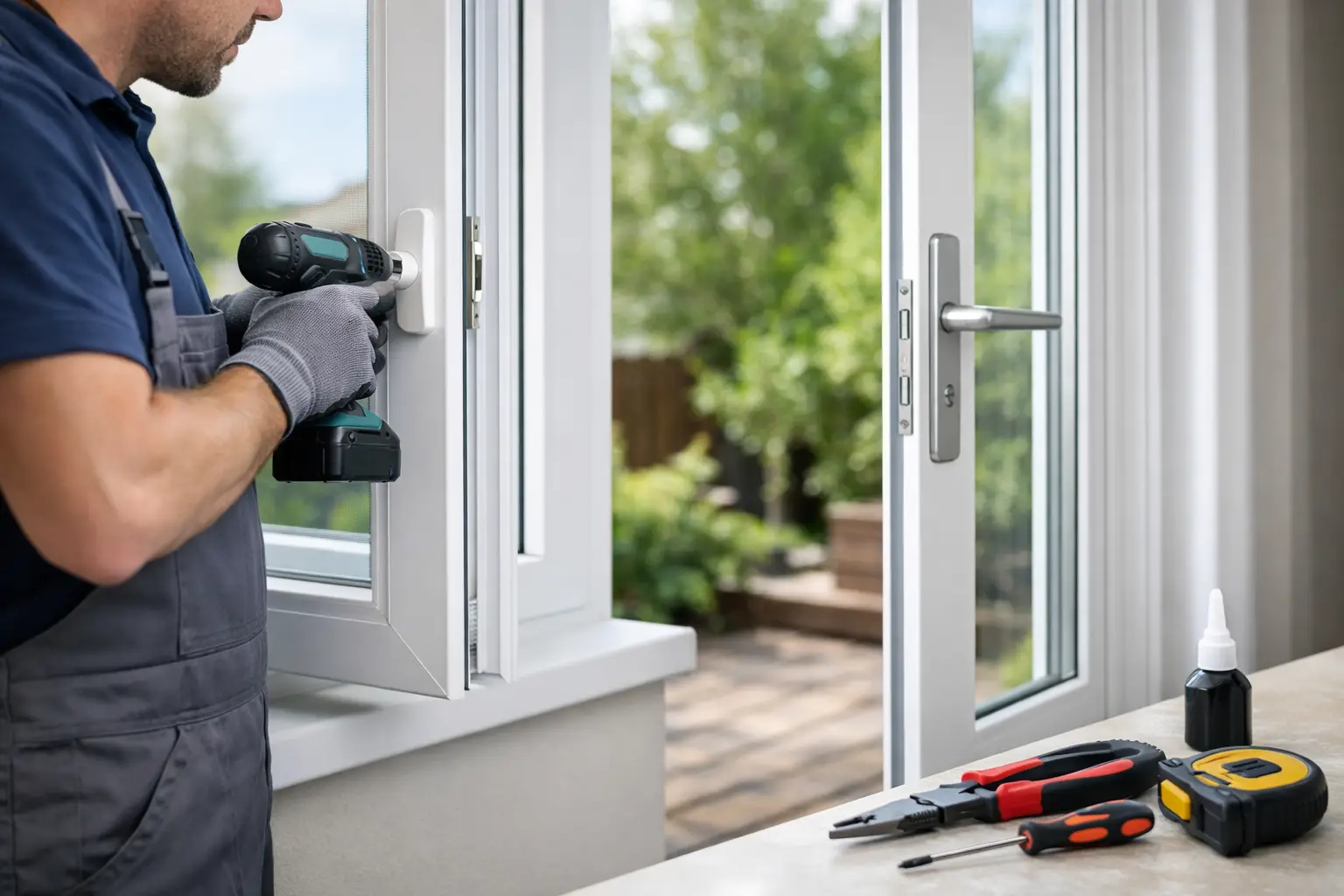
The frame is positioned using packers so it remains level, plumb, and square. Mechanical fixings should be placed at suitable intervals without distorting the profile. The operable sash or door leaf must then be checked for even gaps, smooth movement, and positive locking before final perimeter sealing begins.
Professional sealing is a layered detail, not a cosmetic line applied at the end. Appropriate insulation and backing materials fill the joint, while internal and external sealants are selected for their location and movement capability. Exterior joints should shed water away from the building, while drainage holes within the UPVC frame must remain clear. Blocking them can trap water and compromise performance.
Test every moving part at handover
Before handover, each window and door should open, close, lock, and latch without excessive force. Check that the handles sit securely, hinges are adjusted, glass is undamaged, and gaskets form a continuous seal. Sliding doors need particular attention: rollers should glide cleanly, tracks should be free of construction residue, and the panels should meet evenly when closed.
For a renovation or full fit-out, this quality check should happen alongside the finishing trades. Paint, flooring, stone sills, curtains, and joinery can all affect the final appearance around an opening. Coordinating these details protects both the product and the polished visual result.
Maintenance of UPVC Windows and Doors
UPVC does not require painting or the intensive upkeep associated with some timber systems, but it benefits from a simple planned routine. In Dubai’s dusty climate, neglect often shows first in the tracks, seals, and hardware rather than on the frame itself.
Clean frames every few months with lukewarm water, a soft cloth, and a mild non-abrasive cleaner. Avoid abrasive pads, strong solvents, bleach, and harsh degreasers, which can dull the surface or damage seals. For textured or wood-effect profiles, use a soft brush to lift dust from grooves without scratching the finish.
Tracks should be vacuumed or brushed regularly, especially on balcony doors and frequently used sliding systems. Dust and grit can interfere with rollers, cause drag, and wear down components over time. After cleaning, wipe tracks dry and make sure drainage channels and weep holes are open.
Gaskets deserve a close look twice a year. They should remain supple, clean, and seated correctly around the frame. If they look flattened, split, loose, or brittle, arrange replacement rather than trying to compensate with extra sealant. Sound gaskets help preserve the tight closure that keeps conditioned air inside and outside dust where it belongs.
Hinges, locks, and handles may need light lubrication according to the hardware manufacturer’s guidance. Use a suitable non-gumming lubricant sparingly. If a handle becomes stiff or a door needs lifting to lock, do not force it. Minor hinge and striker-plate adjustments can often correct alignment early, before the hardware becomes damaged.
Warning Signs That Need Professional Attention
A little seasonal adjustment is normal, but repeated sticking, rattling, drafts, water marks, or condensation between glass panes are not issues to ignore. They can signal failed seals, blocked drainage, deteriorated hardware, glazing problems, or movement in the surrounding opening.
Look closely after unusual rain or sandstorms. Water staining around a frame, swollen adjacent finishes, or visible gaps in exterior sealant should be investigated promptly. In a luxury interior, moisture can affect timber flooring, veneer panels, wall finishes, and custom joinery long before the source becomes obvious.
Security is another reason to act early. A lock that does not engage fully, a loose handle, cracked glass, or a door that does not sit firmly in its frame deserves immediate attention. These are functional concerns, but they also affect the confidence and ease with which a space is used every day.
Make the Window Part of the Whole Design
Windows and doors frame more than a view. They influence daylight, furniture placement, privacy, facade character, room acoustics, and the perceived scale of a space. Their installation should therefore be considered alongside the complete design plan, from the first layout sketch through final handover.
Aakruti Technical Services Co. approaches these details as part of a coordinated transformation, aligning technical fitment with interior finishes, bespoke joinery, project schedules, and the standards expected of a beautifully completed property. When the frame, glass, hardware, and surrounding craftsmanship work together, the result feels effortless – and stays that way with the right care.