
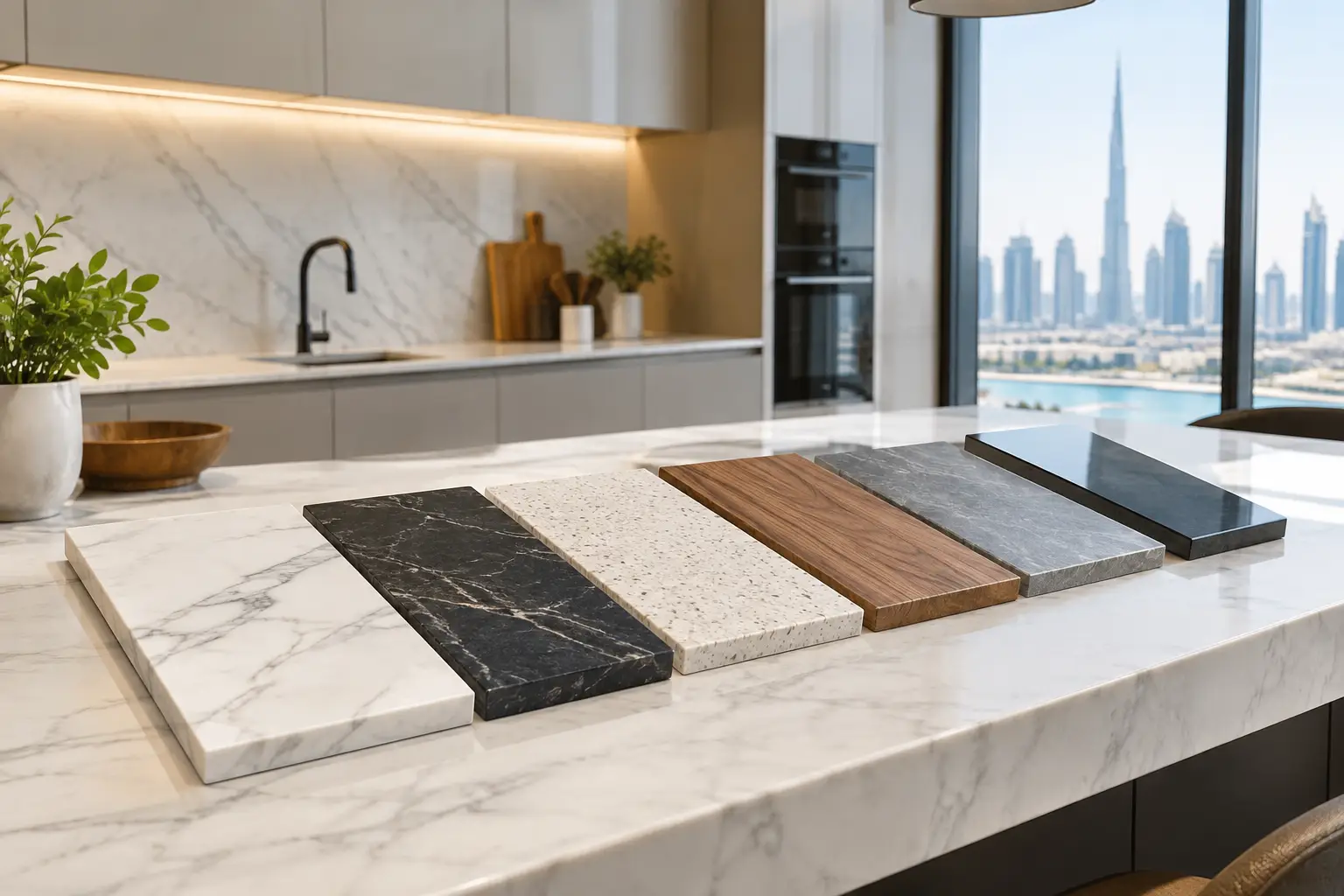
A countertop carries more than hot pans and breakfast plates. It sets the visual temperature of the room, anchors the cabinetry, and takes the hardest daily wear in your kitchen. Choosing the best kitchen countertop materials means balancing the finish you love with how you cook, clean, entertain, and live. In a carefully designed home, this decision should feel considered rather than overwhelming.
The right surface can make a compact apartment kitchen feel refined, give a family villa kitchen greater resilience, or turn a dramatic island into the focal point of the room. Material matters, but so do details such as edge profiles, slab movement, seams, backsplash continuity, and the joinery surrounding it.
Start With How Your Kitchen Will Be Used
Before selecting samples, consider the demands your kitchen will face. A household that cooks every day needs a different solution than a showpiece kitchen used primarily for hosting. Families may value stain resistance and low maintenance, while passionate cooks may prioritize heat tolerance and a generous preparation area.
The visual direction matters just as much. A veined stone-look surface can bring softness to clean-lined cabinetry. A dark, honed finish can create a tailored, architectural mood. Warm natural materials can make a contemporary kitchen feel more personal, though they often require greater care.
A strong kitchen design does not select a countertop in isolation. It coordinates the surface with cabinet color, hardware, flooring, lighting, and the proportions of the room. That is where vision meets craftsmanship.
Best Kitchen Countertop Materials to Consider
Quartz: The polished, practical choice
Engineered quartz remains a favorite for homeowners who want a luxurious appearance with straightforward upkeep. Made from natural quartz particles combined with resins and pigments, it is available in a wide spectrum of colors and patterns, including convincing marble-inspired veining and understated concrete effects.
Quartz is nonporous, so it resists everyday stains and does not require routine sealing. It is an excellent fit for active homes, especially where the kitchen is used for both cooking and gathering. Its consistent appearance also helps create a clean, controlled look across large islands and long counter runs.
The trade-off is heat. Quartz is durable, but placing very hot cookware directly on it can damage the resin binders. Use trivets, particularly near the cooktop. For a refined kitchen that needs to work hard with minimal maintenance, quartz is often one of the strongest choices.
Natural marble: Timeless character with a softer side
Marble has an unmistakable presence. Its veining, tonal variation, and natural depth can transform a kitchen into a living work of art. No engineered surface fully replicates the individuality of a beautiful marble slab, which is why it remains a compelling option for statement islands, baking areas, and elegant entertaining spaces.
However, marble is porous and comparatively soft. Acidic ingredients such as lemon, vinegar, and tomato can etch the finish, while spills may stain if not addressed promptly. Sealing helps, but it does not make marble maintenance-free.
Marble works best for clients who appreciate the graceful patina that develops over time. If every mark will feel like a flaw, choose quartz or sintered stone instead. If you value natural evolution and classic luxury, marble rewards that choice with character no factory-made surface can duplicate.
Granite: Natural strength and visual depth
Granite offers the durability and individuality of natural stone with greater resistance to scratches and heat than marble. Its mineral composition creates distinctive movement, flecks, and depth, making it especially effective in kitchens that need a more substantial, grounded feel.
It suits busy homes well, but granite usually needs periodic sealing to reduce the risk of staining. The amount of maintenance depends on the specific slab and finish. Some varieties are more uniform and contemporary, while others are highly patterned and can become the visual center of the room.
Granite is worth considering when you want real stone and a surface that can comfortably handle serious cooking. Selecting the slab in person is essential, as the final result can vary considerably from a small sample.
Porcelain and sintered stone: High performance, contemporary appeal
Porcelain slabs and sintered stone are designed for exceptional performance. They are highly resistant to heat, scratches, UV exposure, and stains, making them particularly appealing for bright kitchens and homes with strong natural light. Their slim profiles and large-format slabs support a crisp, modern aesthetic.
These materials can replicate marble, travertine, metal, concrete, or solid colors with impressive realism. They are also suitable for matching backsplashes, wall cladding, and in some cases outdoor kitchen surfaces, creating visual continuity across the space.
Installation is where expertise matters. Large slabs require precise handling, careful support, and accurate cutouts for sinks and appliances. Their edges can chip if fabricated or installed poorly. With skilled technical execution, porcelain or sintered stone delivers a sleek surface that is built for demanding use.
Solid surface: Smooth, adaptable, and repairable
Solid surface materials offer a quiet, minimal look with nearly invisible seams. Because the material is consistent throughout, it can be formed into integrated sinks, curved details, and continuous backsplashes. This makes it particularly attractive for contemporary kitchens where visual calm is the goal.
It is nonporous and easy to clean, while minor scratches can often be repaired. On the other hand, solid surface is less resistant to high heat and sharp knives than stone-based options. It is best for homeowners who prioritize a smooth, tailored appearance and are willing to use cutting boards and heat protection.
Wood and butcher block: Warmth that needs commitment
Wood countertops introduce texture and warmth that stone cannot provide. They work beautifully as a dedicated island section, breakfast bar, or baking station, especially in kitchens that combine modern cabinetry with natural finishes.
Wood needs regular oiling, prompt cleanup, and sensible protection from standing water. It can scratch and dent, but many people find that its changing surface adds charm rather than concern. Used selectively alongside quartz, stone, or porcelain, wood can soften a kitchen without placing maintenance demands on every work area.
Choosing the Right Finish and Edge Detail
A countertop’s finish changes both its appearance and its daily behavior. Polished surfaces reflect light and make veining more pronounced, creating a crisp, elevated look. Honed finishes are softer and more matte, often better suited to relaxed contemporary interiors. Textured finishes can bring depth, though they may need more attention during cleaning.
Edge details deserve equal attention. A slim eased edge feels modern and restrained. A mitred edge can make a surface appear thicker and more sculptural, especially on an island. More traditional profiles may suit classic cabinetry, but they should be proportioned carefully to avoid making the design feel dated.
For a cohesive result, the countertop should be finalized alongside the cabinet drawings. Sink placement, faucet reach, drainage grooves, appliance clearances, and seam locations all affect the finished appearance and function.
A Smart Investment Is Not Always the Most Expensive Slab
The best material is the one that supports the way you live while protecting the overall quality of the renovation. A premium natural stone may be perfect for a statement island but unnecessary for a secondary pantry counter. A high-performance sintered stone can justify its cost in a kitchen exposed to heavy cooking and sunlight. Quartz may offer the strongest balance of beauty, durability, and budget control for many homes.
Rather than allocating the full budget to a single dramatic slab, consider where material impact will be seen and felt most. A well-designed combination of surfaces can create more depth than using one material everywhere. The goal is not simply a beautiful countertop on installation day. It is a kitchen that remains practical, composed, and distinctly yours long after handover.
When your material choices are coordinated with thoughtful space planning, bespoke joinery, and precise installation, the kitchen stops being a collection of finishes. It becomes the room that makes everyday life feel better.