
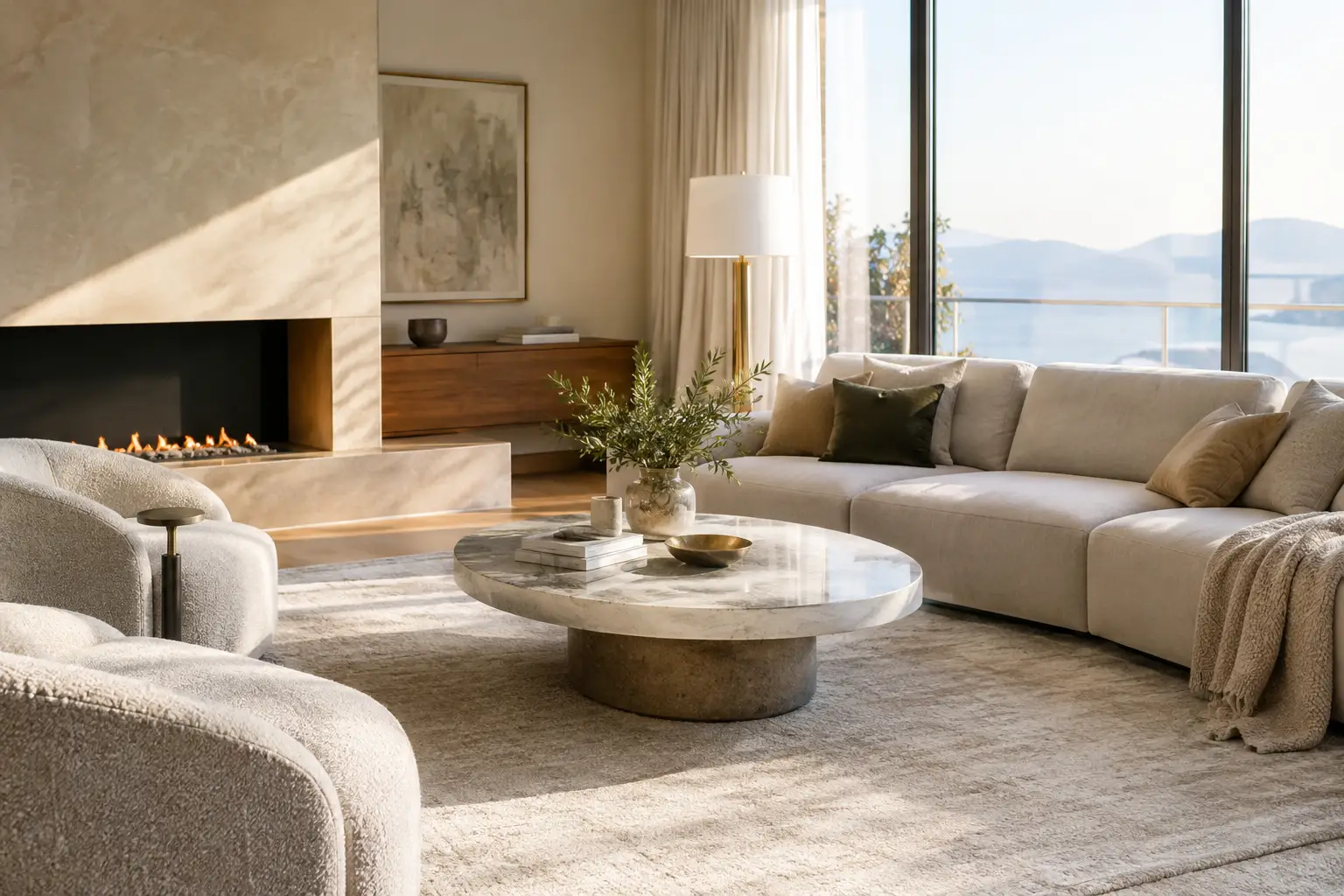
A room can have marble, designer furniture, and dramatic lighting yet still feel unfinished. True luxury interiors are not defined by expensive items placed in isolation. They are felt in the way a door closes, how daylight moves across a textured wall, where a guest naturally sets down a drink, and how easily daily life unfolds within the space.
That sense of ease is carefully constructed. It comes from a clear design story, disciplined planning, exceptional materials, and craftsmanship that holds up well beyond the reveal. For homeowners and commercial decision-makers, this is what turns an attractive property into a living work of art with real purpose.
Luxury Interiors Begin With How You Live
The strongest interiors do not start with a catalog or a trend. They start with questions. How does the household gather? Is the kitchen used for elaborate entertaining or quick family breakfasts? Does an office need quiet focus, client confidence, or both? Which routines feel inconvenient in the current layout?
Answers to these questions shape the plan long before finishes are selected. A villa may need a welcoming formal majlis alongside a relaxed family lounge. A city apartment may benefit more from intelligent storage and visual openness than from adding decorative features. In a commercial setting, the reception, meeting rooms, workstations, and circulation paths must reflect the rhythm of the business.
Luxury is personal because it is responsive. A room designed around the people who use it will feel more refined than one built to imitate a showroom. That is also why copying a single image rarely produces the desired result. Images can communicate mood, but they cannot solve the proportions, lighting conditions, service requirements, and habits of a specific property.
A Cohesive Story Creates Calm
Every considered interior has a point of view. It might be warm contemporary, sculptural minimalism, quiet classic, or a layered fusion of regional influences and modern lines. The label matters less than consistency.
This does not mean every surface should match. In fact, overmatching can make a space feel flat. Cohesion comes from repeated cues: a carefully chosen timber tone, curved profiles that reappear in furniture and joinery, a restrained metal finish, or a color family carried from public spaces into private rooms. These connections create visual calm while allowing each area to have its own character.
A professional design process tests these decisions together. Flooring, walls, cabinetry, upholstery, stone, lighting, hardware, and window treatments need to work as one composition. Selecting them separately can lead to expensive corrections later, especially when samples looked appealing on their own but compete once installed.
The Foundations of Luxury Interiors
Luxury has a visual language, but its credibility comes from what happens beneath the surface. A beautiful kitchen with poorly planned storage will frustrate its owners. An impressive reception area with harsh acoustics will not support conversations. A custom wardrobe that lacks precise internal organization wastes the opportunity that bespoke joinery provides.
Space planning is where aesthetic ambition meets everyday performance. It addresses room proportions, sightlines, circulation, furniture scale, ergonomics, and the location of technical services. In renovations, this work is particularly valuable because existing conditions often place limits on plumbing, electrical systems, structural elements, and ceiling heights. A thoughtful plan turns those constraints into informed design decisions rather than last-minute compromises.
Lighting deserves the same level of attention. One central fixture rarely gives a room the depth it needs. Ambient lighting creates a comfortable overall glow, task lighting supports activities such as cooking or reading, and accent lighting gives art, architecture, or textured finishes greater presence. Dimmers and scene controls add another level of comfort, allowing the atmosphere to shift from a bright morning to a relaxed evening.
Material choices should be guided by both beauty and use. Natural stone can bring depth and permanence to an entrance or bathroom, but some varieties require more care than sintered surfaces or porcelain. Solid timber offers warmth and can age beautifully, while engineered finishes may be the wiser choice for areas exposed to heat, moisture, or intensive use. There is no single premium material for every application. The right choice balances appearance, longevity, maintenance, and budget.
Craftsmanship Is Visible in the Details
The details people may not consciously name are often the ones that make a room feel expensive. Consider the alignment of cabinet reveals, the consistency of grout lines, the feel of a drawer, the transition between flooring materials, or the way a concealed door sits within its wall paneling. Precision makes design feel intentional.
Bespoke joinery is especially powerful because it can solve practical needs without interrupting the room’s architecture. A media wall can hide equipment and cables while becoming a focal point. A bedroom headboard can integrate lighting, bedside tables, and charging points. A compact office can include storage, display, and acoustic treatment within one tailored composition.
However, custom work is not automatically better simply because it is custom. It requires accurate site measurement, detailed drawings, capable fabrication, careful installation, and quality checks. The more complex the joinery, the more essential it is to have design and technical teams working from the same information.
Why Execution Defines the Final Result
Many renovation projects lose momentum between the approved design and the finished handover. The vision may be strong, but separate contractors, unclear specifications, delayed materials, and inconsistent site coordination can dilute the result. This is where a design-and-build approach brings genuine value.
When the same team guides design development, contractor coordination, fit-out, joinery, and project management, decisions can be reviewed through both creative and technical lenses. A lighting feature is assessed not only for its impact but also for ceiling coordination, electrical loading, access for maintenance, and installation timing. A stone detail is considered alongside substrate preparation, edge profiles, and adjacent materials.
This integrated process also supports budget discipline. Premium interiors require investment, but they should not require guesswork. A transparent scope helps clients understand where value is being allocated and where alternatives may be sensible. It may be worth prioritizing custom kitchen cabinetry and durable countertop materials while selecting a more efficient finish for a secondary utility area. The right priorities depend on the property, intended use, and long-term goals.
For investors, durability and market appeal may lead the conversation. For a family home, the focus may be on comfort, storage, and materials that can withstand active daily use. For a client-facing workplace, brand expression, employee experience, and operational flow may take precedence. Good design does not treat these priorities as competing forces. It organizes them into a clear brief.
A More Confident Way to Plan a Transformation
Before construction begins, clients should be able to see more than a collection of attractive selections. They should understand the spatial plan, design direction, likely investment, implementation sequence, and decision points ahead. Visual presentations and virtual tours can make the design easier to evaluate, but drawings, specifications, and a coordinated project plan are what help bring it to life accurately.
At Aakruti Technical Services Co., the process is built around turning a client’s vision into a finished environment without asking them to manage every trade themselves. Initial consultation establishes the brief. Design and planning give the concept technical clarity. Implementation brings contractors, materials, and craftsmanship into alignment. Final handover ensures the completed space is ready to be lived in, worked in, and enjoyed.
The most rewarding luxury projects leave room for a little patience. Fine materials need proper installation. Custom pieces need precise fabrication. Decisions made early can prevent disruption later. With the right team and a well-defined plan, that care becomes part of the value, not a source of stress.
Choose the details that will improve your everyday experience, not just the ones that photograph well. When planning, craftsmanship, and personality are given equal attention, your space can make a powerful first impression and remain a pleasure to use for years to come.