A marble sample can look spectacular under a showroom spotlight and still be the wrong choice for a busy family kitchen. A richly textured wallcovering may give a reception area instant character, yet become difficult to repair after everyday scuffs. Choosing premium interior finishes is not simply about selecting the most expensive surface. It is about specifying materials that look considered, feel right in the hand, support the way a space is used, and retain their quality long after handover.
For a villa, apartment, office, retail space, or hospitality setting, finishes create the first impression and the lasting experience. They carry the color, light, texture, and craftsmanship that turn a layout into a living work of art. The best decisions come from balancing visual ambition with practical performance.
Start With How the Space Will Be Lived In
Every finish should answer a simple question: what will this surface need to withstand? A formal majlis with occasional use has very different requirements from a kitchen used several times a day. A high-traffic office lobby needs resilient flooring and wall protection, while a primary bedroom can prioritize warmth, softness, and tactile detail.
Consider traffic, moisture, direct sunlight, cleaning routines, pets, children, and the likelihood of spills before deciding on a material. In Dubai, strong natural light and air-conditioning also deserve attention. Sun exposure can alter the appearance of some timbers, fabrics, and pigments over time, while temperature changes can affect the movement of natural materials and joinery.
This does not mean avoiding delicate or expressive finishes. It means placing them intelligently. Natural stone may be perfect for a feature wall, while a sintered surface or engineered stone may be the more practical choice for a hardworking countertop. A delicate silk-blend wallcovering can elevate a private suite, whereas a durable commercial-grade alternative may better suit a client-facing corridor.
Build a Material Palette, Not a Collection of Samples
Premium interiors feel composed because the materials relate to one another. The veining in stone, the undertone of timber, the reflectivity of metal, and the texture of upholstery should work together rather than compete for attention.
Begin with two or three anchor materials. These may include a main flooring finish, a stone or porcelain surface, and a wood tone for joinery. From there, introduce contrast through paint, metal detailing, fabrics, or decorative plaster. A restrained palette often feels more luxurious than a room where every surface asks to be noticed.
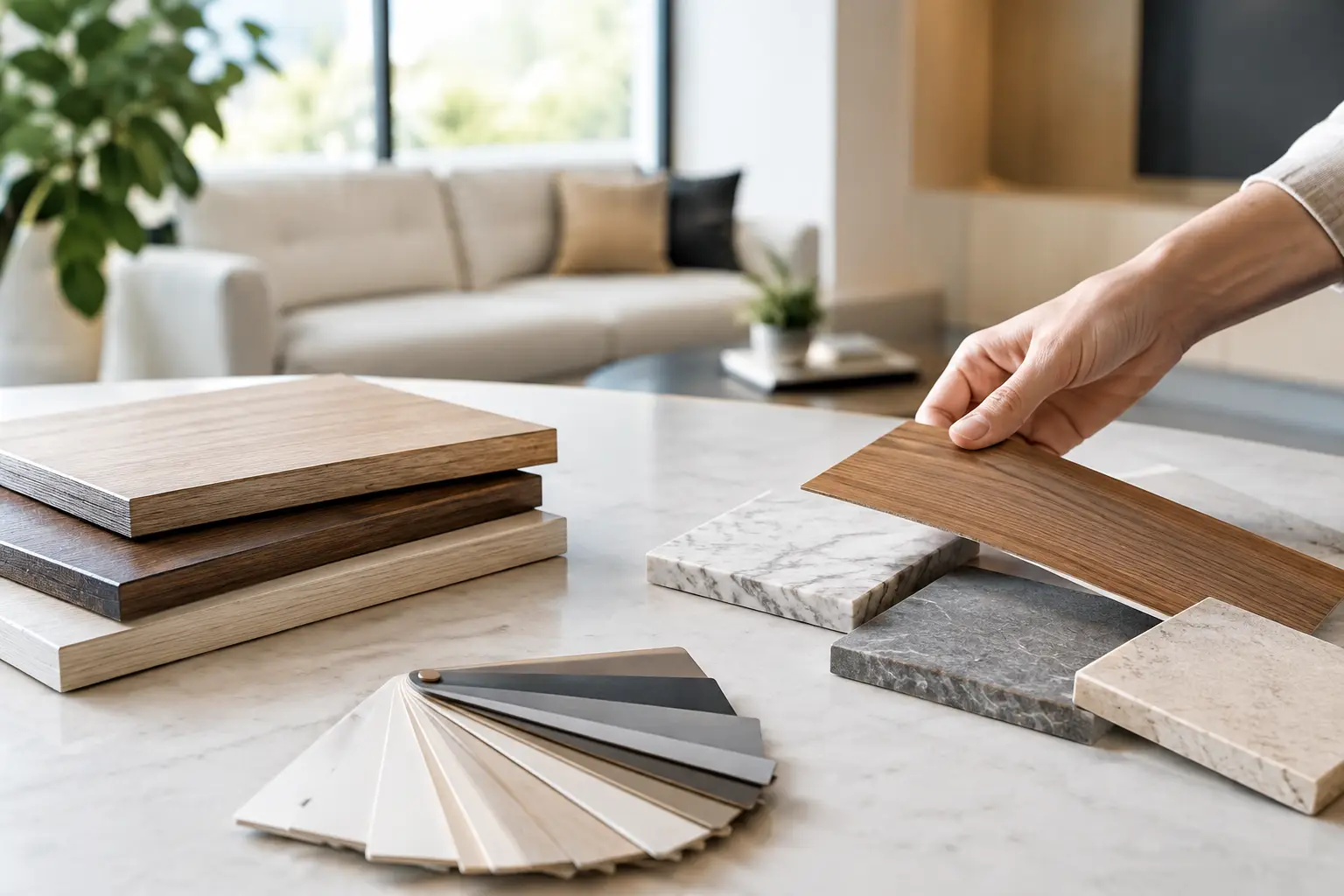
Pay close attention to undertones. White is rarely just white. It may lean warm, cool, gray, creamy, or pink. The same is true of timber stains, stones, and metals. A warm walnut veneer beside blue-gray marble can be striking when intentional, but discordant when selected separately. Reviewing full-size samples together, in the actual space, helps reveal these relationships before installation begins.
Light changes everything. A finish that appears soft beige in daylight may look yellow under warm evening lighting. Gloss finishes can amplify light and make smaller rooms feel more expansive, but they also reveal fingerprints and imperfections more readily. Matte surfaces create calm and depth, though some require specific cleaning methods to prevent marks. There is no universal best choice – only the right finish for the design intent and daily routine.
Choosing Premium Interior Finishes by Performance
Luxury is often felt in the details that continue to work beautifully. That makes technical performance a central part of material selection, not an afterthought.
Flooring: prioritize longevity underfoot
Flooring receives constant wear, so visual appeal alone is not enough. Natural marble delivers unmistakable depth and individuality, but it is porous and can etch when exposed to acidic spills. It works beautifully in carefully maintained formal spaces, yet may require more care than some households or commercial settings expect.
Large-format porcelain can achieve an elegant stone-like look with excellent stain and scratch resistance. Engineered wood brings warmth and character, but the veneer thickness, installation method, and expected humidity conditions should be reviewed carefully. In commercial settings, slip resistance, acoustic comfort, and the ability to replace damaged sections may be as relevant as the finish itself.
Kitchens and bathrooms: specify for water, heat, and care
These spaces ask the most of their materials. Countertops must handle heat, stains, and repeated cleaning. Cabinet fronts need to resist moisture, fingerprints, and daily opening. Bathroom wall and floor finishes need correct waterproofing behind them, not simply attractive tiles on the surface.
Quartz, porcelain slab, granite, and sintered stone each offer different strengths. Some natural stones develop a patina that many owners value; others prefer a more consistent, low-maintenance surface. The right decision depends on whether the client wants a material to remain visually uniform or to evolve with use.
For joinery, premium hardware is as valuable as the door finish. Well-made hinges, runners, pull-out systems, and internal organizers improve the experience of a kitchen or wardrobe every day. Precision construction and careful edge detailing are what make bespoke joinery feel refined long after the initial reveal.
Walls and ceilings: use texture with purpose
Walls offer an opportunity to create depth without crowding a room. Decorative paint, timber paneling, fluted details, fabric panels, stone, and wallcoverings can define a focal point or improve acoustics. The key is placement. A strong finish has greater impact when it is allowed to breathe.
In offices and hospitality spaces, acoustic panels and upholstered wall treatments can reduce noise while contributing to the design language. In residences, paneling can add architectural presence to an otherwise plain room. Verify how a selected treatment will meet corners, door frames, electrical plates, and ceiling lines. Premium results come from thoughtful transitions as much as beautiful materials.
Look Beyond the Surface Price
A lower initial price can become expensive if a finish needs frequent repair, requires specialized maintenance, or is difficult to match later. Conversely, a higher-quality material may offer better durability, warranty coverage, and long-term value. Budget discipline does not mean reducing every specification. It means investing where touch, visibility, and daily performance matter most.
Allocate more attention to permanent and high-contact elements such as flooring, kitchen worktops, bathroom waterproofing, doors, cabinetry, lighting controls, and hardware. Decorative accessories and movable furniture can evolve more easily over time. This approach protects the core of the project while leaving room for personal expression.
Ask for clarity on lead times, installation requirements, maintenance expectations, and available quantities before approving a finish. A rare slab may be extraordinary, but it can create scheduling risk if additional material is needed. A professional design-and-build team can coordinate these details early, including mockups, site measurements, and quality checks, so the finished space reflects the approved vision rather than a series of last-minute substitutions.
Insist on Craftsmanship at Every Junction
Even exceptional materials can look ordinary when installation is rushed. Stone bookmatching, grout alignment, veneer direction, shadow gaps, paint preparation, silicone lines, and the meeting point between flooring and joinery all influence the final impression.
Before work begins, confirm the intended details through drawings, samples, and, where appropriate, a site mockup. Discuss how materials will terminate at edges and corners, how different floor levels will meet, and where expansion gaps or access panels are needed. These conversations may feel technical, but they prevent the small compromises that weaken an otherwise refined scheme.
Aakruti brings design direction, technical coordination, bespoke joinery, and implementation under one accountable process. That integrated approach helps protect both the aesthetic concept and the practical standards behind it, from first sample review to final handover.
Choose Finishes You Will Still Enjoy in Five Years
Trends can be useful references, but they should not make a home or workplace feel dated before the project has settled in. Instead of copying a look exactly, identify what draws you to it: perhaps the warmth of oak, the quiet movement of travertine, the richness of brushed bronze, or the calm of tonal plaster. Those qualities can be interpreted in a way that suits your architecture, lifestyle, and budget.
The most successful premium interiors do not depend on one dramatic material. They create a consistent sensory experience – surfaces that look beautiful in changing light, feel satisfying to touch, and perform confidently in real life. Choose with care, request samples, test assumptions, and let craftsmanship guide the final decision. Your finishes should make the space shine on day one and continue to reward you every day after.