A beautifully finished room can still feel incomplete at 7 p.m. if its lighting is treated as an afterthought. The best luxury home lighting plans do more than brighten a space. They shape atmosphere, reveal texture, support daily routines, and make every architectural decision feel intentional.
For a villa, penthouse, or refined apartment, lighting should be designed alongside the ceiling plan, joinery, furniture layout, and finishes. A statement chandelier may create an impressive first glance, but the quiet details – concealed coves, well-placed reading lights, glare-free task lighting, and carefully aimed spotlights – are what make a home feel effortlessly elevated every day.
Start With Layers, Not Fixtures
Luxury lighting is rarely achieved with one central fixture per room. A layered plan combines ambient, task, accent, and decorative light, giving each area depth and flexibility.
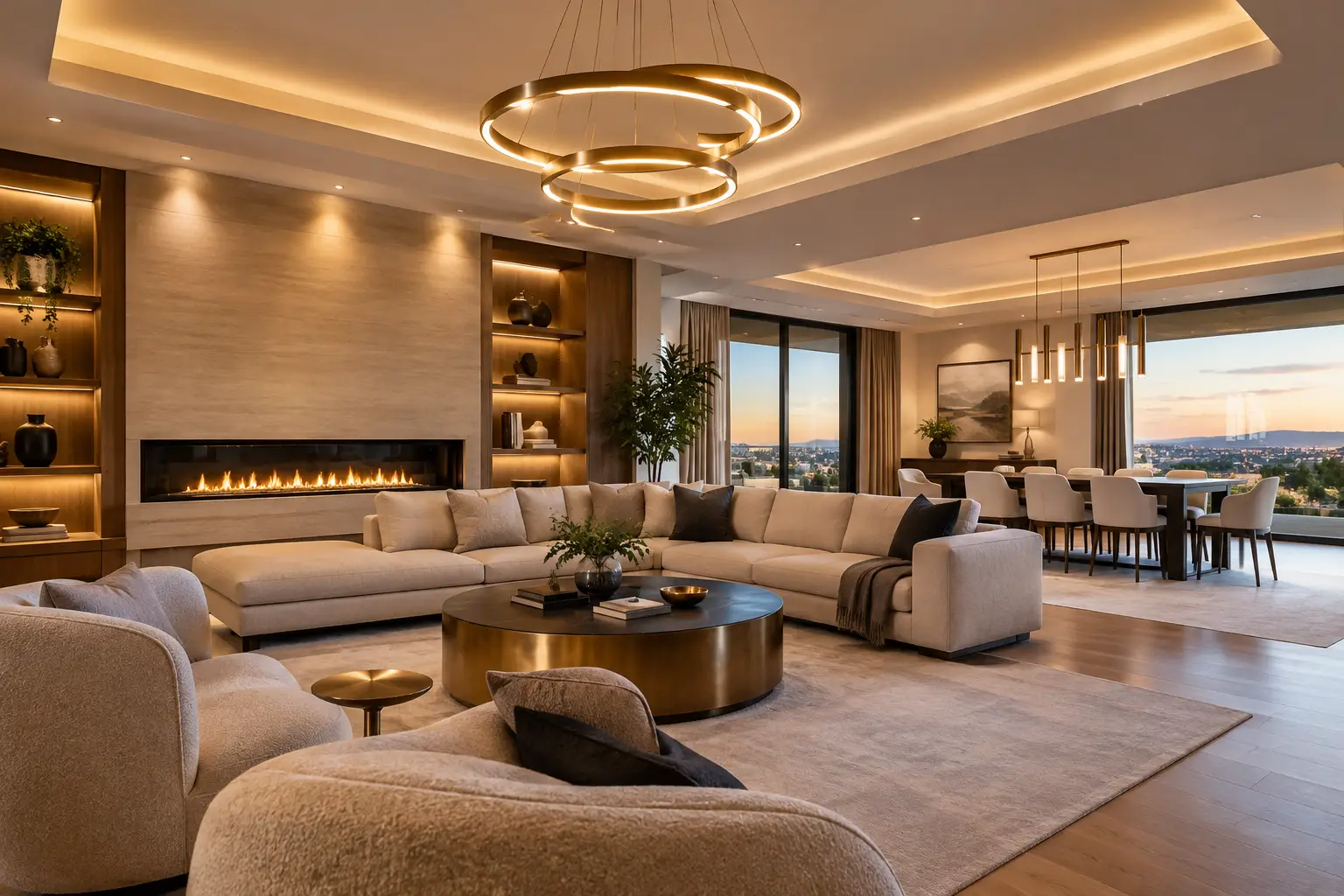
Ambient lighting establishes the overall level of illumination. This can come from recessed downlights, indirect ceiling coves, wall washers, or architectural pendants. Its role is to make movement through the home comfortable without flattening the room or creating harsh shadows.
Task lighting serves a purpose. Think under-cabinet lighting at a kitchen worktop, adjustable bedside reading lamps, focused illumination at a vanity, or a pendant over a dining table. It needs to be bright enough for the activity, yet controlled enough to preserve the calm of the wider space.
Accent lighting creates visual hierarchy. It directs the eye to artwork, a textured stone wall, a sculptural staircase, a display niche, or bespoke joinery. Decorative lighting, meanwhile, adds its own presence through chandeliers, pendants, and wall sconces. The strongest schemes allow these layers to work together, rather than asking a single fixture to do every job.
Plan Lighting Around How You Live
A lighting plan should begin with lifestyle, not a catalog of fittings. A formal living room used mainly for entertaining requires a different approach from a family lounge that hosts movie nights, children’s homework, and late-evening conversations.
Consider what happens in every room from morning through night. Where do you pause, prepare, work, read, dine, and relax? Which views deserve emphasis after dark? Which areas should feel brighter for safety, and which should retreat into a softer mood?
This is particularly valuable in open-plan homes. The kitchen, dining area, and living space may share one visual envelope, but they serve distinct functions. Separate lighting circuits allow the kitchen to remain practical while the dining area becomes intimate and the lounge settles into a low, welcoming glow. Without this level of control, an open plan can feel either overlit or inconveniently dim.
Build Scenes, Not Just Switches
The most considered lighting plans create scenes. Instead of switching every light on at once, a homeowner can select a mood suited to the moment: arrival, entertaining, dinner, cooking, reading, television, or night mode.
For example, an entertaining scene may illuminate art, joinery, and the dining table while reducing the output of recessed lights. A late-night scene may keep only hallway guidance lighting, a soft cove, and selected lamps active. Dimming is essential here. It brings adaptability to the home and helps even simple materials feel more luxurious.
Smart controls can make this experience intuitive, but they should never complicate it. A beautiful system is of little value if guests cannot find a simple switch. The best approach often combines discreet keypads, familiar wall controls, and app-based scheduling for those who want it.
Give the Ceiling Plan Equal Attention
Lighting decisions affect the ceiling as much as the room below it. Downlights placed without a clear strategy can make a ceiling appear crowded, especially in contemporary interiors where calm, clean planes are part of the design language.
Rather than laying fixtures out in an even grid, align them with furniture zones, wall features, circulation paths, and architectural lines. A pair of downlights might frame a console, while a linear profile follows the edge of a kitchen island. In a living room, directional fixtures can highlight art or curtains without placing a spotlight directly over every seat.
Concealed lighting deserves careful integration as well. Cove lighting can add softness and visual height, but only when the recess is correctly detailed and the light source is hidden from direct view. If the LED strip is visible, the effect immediately feels less refined. The same principle applies to illuminated shelves, vanity mirrors, staircase details, and joinery reveals.
Choose Warmth and Color Accuracy Carefully
The color temperature of light changes how every finish in a room is perceived. In most luxury residential settings, warm white light creates the most inviting result. It complements timber, stone, brass, fabric, and natural finishes while making living spaces feel composed rather than clinical.
However, warm does not mean dim or yellow. Kitchens, wardrobes, studies, and grooming areas often benefit from slightly clearer light, provided it is balanced with the adjoining spaces. What matters is consistency. Moving from a warm living room into a stark white corridor can disrupt the entire experience.
Color rendering is equally important. High-quality light sources show the true character of paint, artwork, food, textiles, and skin tones. This is especially relevant in homes with carefully selected materials. A rich walnut veneer, veined marble, or hand-finished fabric can lose its depth under poor-quality lighting.
Make Each Room Work Harder
The best luxury home lighting plans respond to individual rooms while maintaining a cohesive visual language throughout the property.
Entryways and Hallways
An entry should offer a sense of arrival, not just circulation. A pendant or sculptural chandelier can establish character, supported by wall lights, recessed illumination, or a gentle ceiling cove. Hallways benefit from low-glare lighting that guides movement and gives artwork or textured walls a reason to be seen.
Living and Dining Areas
These rooms need the broadest range of moods. Combine dimmable ambient light with decorative pieces that feel appropriate to the scale of the space. Add accent lighting for art, shelving, and curtains, then ensure seating areas have enough localized light for reading or conversation. In dining rooms, hang pendants at a height that illuminates the table without blocking sightlines across it.
Kitchens
A kitchen needs precise task lighting, particularly at counters, sinks, and cooking zones. Under-cabinet lighting reduces shadows, while pendants can give an island a more social, residential feel. Avoid relying entirely on decorative pendants, though. They may look striking but often fail to light the work surface effectively.
Bedrooms and Bathrooms
Bedrooms call for calm control. Bedside reading lights, soft perimeter lighting, wardrobe illumination, and independently switched circuits make the room practical without sacrificing restfulness. In bathrooms, light should be placed around the mirror rather than only above it, reducing unflattering facial shadows. Moisture ratings and electrical safety requirements must be considered from the outset.
Protect the Design From Common Shortcuts
A lower fixture count is not always a sign of poor planning, and more fixtures do not automatically equal luxury. The goal is purposeful light. Too many downlights create glare and visual clutter; too few leave important areas unusable after sunset.
Budget should also be allocated wisely. Investing in quality drivers, dimmers, controls, and installation can matter more than choosing an expensive decorative fitting for every room. A striking pendant can be replaced later. Poorly planned wiring, visible LEDs, incompatible dimming, and inaccessible maintenance points are far more disruptive to correct after handover.
Coordination is the difference between an attractive concept and a finished home that performs beautifully. Lighting must be reviewed alongside HVAC grilles, curtain pockets, ceiling drops, joinery details, and furniture placement before work begins. Aakruti approaches this coordination as part of the wider design-and-build process, helping clients avoid expensive compromises during implementation.
Let Light Reveal the Home You Have Created
Lighting is one of the final elements installed, yet it influences how every earlier decision is experienced. It can make a compact apartment feel more expansive, bring warmth to a modern villa, and turn functional joinery into a feature worth noticing.
The right plan does not demand attention from every corner. It creates a home that feels composed at first glance and even better as the evening unfolds – a living work of art designed to support real life.