A beautifully renovated home should not ask you to reach for three remotes, search for a charger, or tolerate lighting that feels wrong after sunset. The most compelling smart home renovation trends are less about filling a space with gadgets and more about making daily life feel considered. For homeowners in Dubai, where heat, sunlight, entertaining, and security all shape the way a home performs, technology deserves a place in the design conversation from the first sketch.
The goal is not to make a home feel like a showroom. It is to create a living work of art that responds gracefully to the people inside it, while preserving the calm, material richness, and tailored character of the interior.
Smart Home Renovation Trends That Improve Daily Living
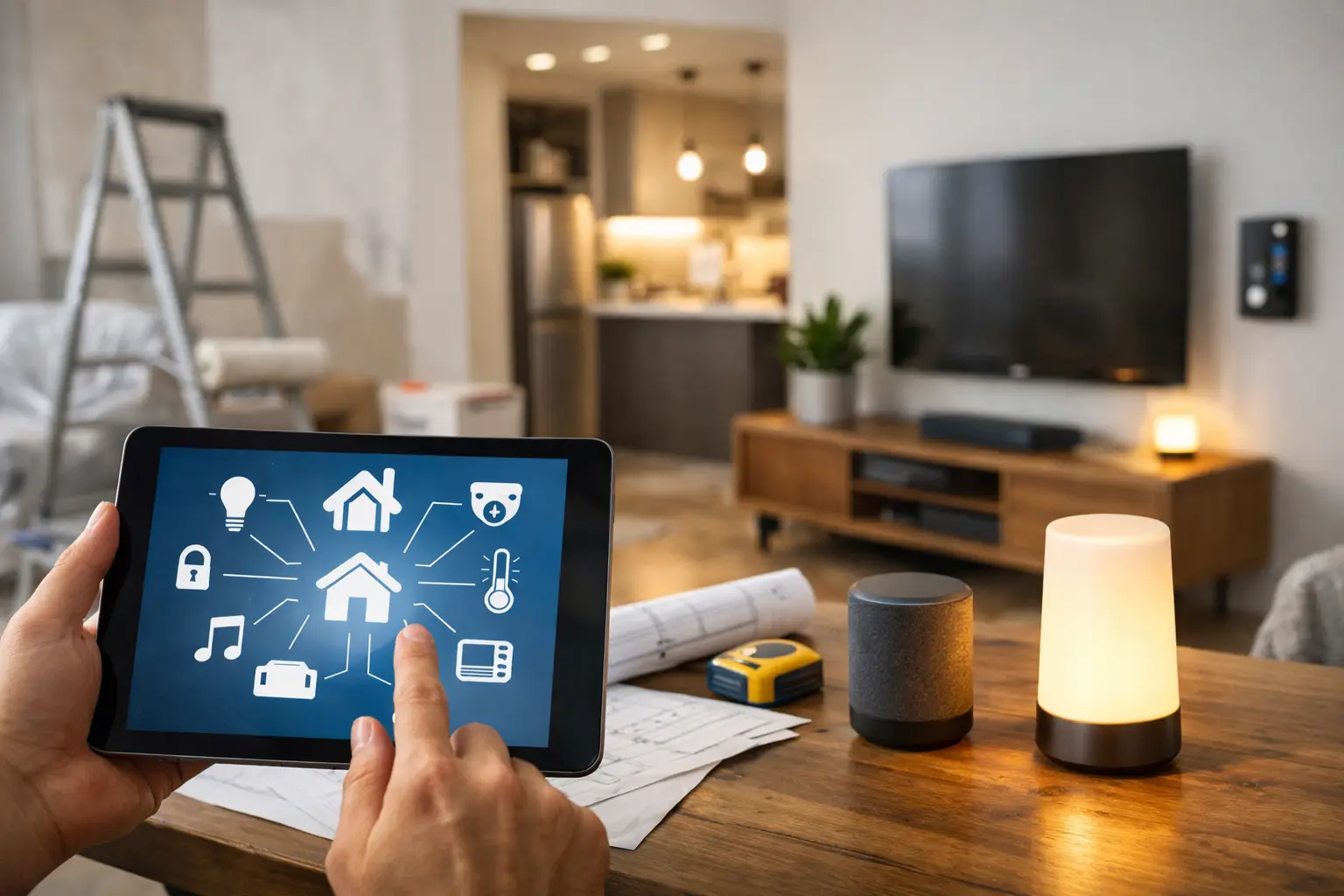
The strongest trend is integration. Rather than adding smart devices room by room after construction, homeowners are planning lighting, climate, shading, audio, access, and connectivity as one coordinated system. This approach creates a more polished result because the technology is accounted for before ceilings close, joinery is fabricated, and finishes are selected.
A single scene can lower motorized shades, adjust the AC, soften the lighting, and begin music for an evening at home. A departure setting can switch off selected circuits, close shades, and activate security features. These moments sound simple, but they remove friction from routines while making the home feel more intentional.
The best systems still work when a guest, child, or household staff member does not want to use an app. Elegant wall keypads, clearly labeled controls, and manual overrides remain essential. Smart should never mean complicated.
Lighting Designed in Layers
Lighting control is one of the most valuable investments in a luxury renovation because it changes how every surface is experienced. The current direction favors layered, dimmable lighting with scenes tailored to the architecture: bright task light for a kitchen, gentle ambient light for a family room, focused illumination for artwork, and low-level pathways for nighttime movement.
Tunable white lighting is increasingly specified in bedrooms, living areas, and home offices. It can shift from cooler, energizing light in the morning to warmer tones later in the day. Its value depends on thoughtful programming. A poorly planned system can feel theatrical or distracting, while a well-designed one quietly supports comfort and rhythm.
Lighting should be coordinated with ceiling details, curtain pockets, wall finishes, and bespoke joinery. Hidden LED channels can make a stone feature, display cabinet, or fluted panel feel sculptural, but only when the profile, color temperature, and glare control have been resolved precisely.
Climate, Air Quality, and Solar Control
Comfort technology is becoming more sophisticated, especially in homes with expansive glazing. Smart thermostats and zoning systems allow different parts of a villa or apartment to respond to actual use, rather than conditioning every room in the same way all day. This can improve comfort and reduce unnecessary energy consumption, although results depend on the existing HVAC system, insulation, and maintenance condition.
Motorized curtains, blinds, and external shading are another major consideration. They protect interiors from harsh sun, help manage heat gain, and offer privacy at the touch of a button. In a refined space, the fabric, track placement, stack-back allowance, and blackout performance matter as much as the motor itself.
Air-quality monitors and discreet purification systems are also finding a natural place in family homes. They are particularly useful where residents have allergies, young children, or a strong preference for a healthier indoor environment. Technology can provide useful data, but it does not replace proper ventilation planning and quality materials with low-emission finishes.
The Quiet Luxury of Hidden Technology
Visible speakers, tangled cables, and a television placed wherever a power outlet happens to be can weaken an otherwise exceptional room. One of the most enduring smart home renovation trends is technology that recedes into the architecture.
Concealed speakers can be integrated into ceilings or joinery. TVs may be recessed into feature walls, hidden behind panels, or positioned within custom cabinetry that supports both viewing comfort and a cohesive composition. Charging drawers, appliance garages, and integrated power points keep everyday devices accessible without allowing them to dominate kitchen counters or bedside tables.
This is where design and technical execution must work together. A joinery detail may need ventilation, service access, acoustic consideration, cable routes, and structural reinforcement. Leaving those decisions until installation often leads to compromises that are expensive to correct later.
Kitchens Built for How People Really Live
The smart kitchen is moving beyond novelty appliances. Homeowners are prioritizing practical features that reduce visual clutter and support entertaining: touchless or filtered-water faucets, discreet charging, integrated appliances, intelligent ventilation, and lighting that changes from food preparation to dining.
A connected oven can be useful for busy households, but it is not automatically the right choice for every client. Consider how often the feature will be used, whether it can be serviced locally, and whether the interface will remain intuitive over time. A high-quality appliance with dependable performance may be a better investment than a model chosen mainly for its app.
Kitchen renovation planning should also include outlet placement, network coverage, appliance specifications, and cabinetry tolerances early. Bespoke joinery gives these details a home, transforming a hardworking kitchen into a composed space rather than a collection of devices.
Security Without the Fortress Feeling
Modern security is becoming more discreet and more personalized. Video doorbells, smart locks, cameras, leak detectors, and integrated access control can offer meaningful peace of mind, particularly for second homes, larger properties, and owners who travel frequently.
The trade-off is privacy. Cameras should be placed purposefully, not indiscriminately, and the system should use secure passwords, multi-factor authentication, and a well-managed network. Avoid choosing products solely because they are inexpensive or popular. Long-term support, data practices, compatibility, and installer expertise are more relevant than a long feature list.
For apartment renovations, coordination with building management may determine what is possible at the entry door, within common areas, or around network infrastructure. For villas, perimeter planning, gate access, landscape lighting, and coverage across outdoor spaces should be considered as one strategy.
Plan the Infrastructure Before the Finishes
A smart home is only as reliable as the infrastructure behind it. Wi-Fi coverage, wired data points, electrical capacity, equipment locations, and cable pathways should be designed before demolition or construction begins. This is particularly important in larger homes, where concrete walls, stone finishes, and multiple floors can weaken wireless signals.
Wireless products have a valuable role. They can be efficient for smaller upgrades, rental properties, or areas where opening walls is impractical. Yet a full renovation is the right moment to install structured cabling for critical locations such as televisions, workspaces, access points, cameras, and central equipment. A hybrid approach is often the most sensible: wired where performance matters most, wireless where flexibility is beneficial.
Leave room for maintenance and future change. Network racks, power supplies, and control hardware need ventilation and accessible service points. A beautiful millwork panel that cannot be opened easily becomes a frustration when a system requires attention.
Design for Longevity, Not for a Trend Cycle
Technology evolves faster than stone, timber, and custom cabinetry. That is why the core renovation should be timeless, while controls and devices remain serviceable and adaptable. Select systems with a credible support path and avoid locking the entire home into a proprietary ecosystem without understanding the long-term implications.
It also helps to decide what must be automated and what can remain beautifully simple. Automated shades in a sun-facing living room may deliver clear value. App-controlled decorative accessories may not. The right solution reflects the household’s routines, not a checklist copied from another project.
A detailed design-and-build process brings these decisions together before work begins: first understanding how the space is used, then developing the layout and technical plan, coordinating installation, and testing every element before handover. At Aakruti Technical Services Co., that integrated thinking protects both the visual concept and the practical performance of the finished home.
The most successful renovation will not announce its intelligence every time you enter the room. It will simply make the morning calmer, the evening warmer, the home more secure, and every crafted detail easier to enjoy.