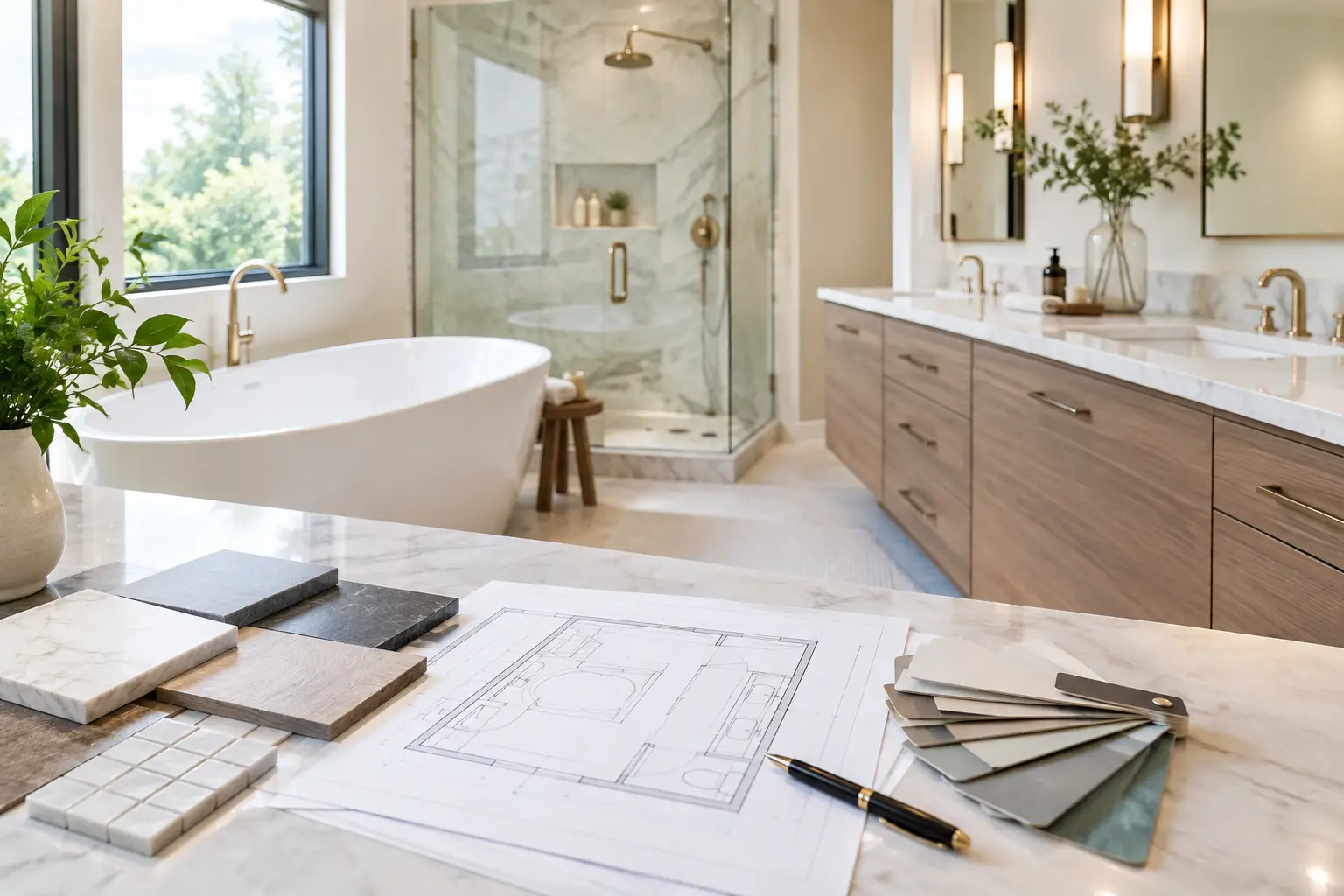
A beautiful bathroom rarely begins with a tile sample. It begins with the way you want to feel at 7 a.m., how easily the room supports your routine, and whether every detail will still feel considered years from now. This luxury bathroom renovation planning guide helps turn that ambition into a clear, manageable brief – before construction decisions, material orders, and contractor schedules begin.
For homeowners in Dubai, a luxury bathroom must also work hard behind its polished surface. Heat, humidity, water pressure, ventilation, and apartment or villa constraints all shape what will perform well over time. The most successful renovations pair a distinctive point of view with technical planning that leaves little to chance.
Start With the Experience, Not the Fixtures
Luxury is not defined by choosing the most expensive tapware or the largest slab of marble. It is the feeling of a room designed around the people who use it. A generous walk-in shower may matter more than a freestanding tub for a busy couple. For a primary suite, a double vanity with individual storage can make daily life noticeably calmer. In a guest bathroom, durability and easy maintenance may take priority over highly personalized details.
Begin by defining the role of the room. Is it a private retreat, a family bathroom, a guest powder room, or part of an investment property? Then consider the rituals that happen there: getting ready together, bathing children, applying makeup, storing linens, or enjoying a slower evening routine. These answers shape the layout far better than a mood board alone.
A strong design concept can be expressed in a few clear words: warm contemporary spa, tailored hotel elegance, sculptural minimalism, or classic stone with modern lines. This direction guides every later choice, from the grain of the vanity timber to the finish of the shower frame. It also prevents a common renovation mistake – collecting attractive products that do not create one coherent space.
Build the Layout Around Comfort and Access
The existing plumbing locations influence both budget and possibility. Moving a toilet, floor drain, or shower supply can be worthwhile when it transforms circulation, but it requires careful coordination. In apartments, building rules and approved service shafts may limit what can be relocated. In villas, the options may be broader, yet waterproofing, drainage falls, and pipe access still need to be resolved precisely.
Think about movement before surface finishes. Can the bathroom door open without interfering with a vanity or toilet? Is there enough room to step out of the shower without soaking the main floor? Does the vanity provide comfortable elbow room? A luxurious room should never feel like a showroom where daily use was an afterthought.
Give wet and dry zones a clear purpose
Separating wet and dry areas makes a bathroom easier to use and easier to maintain. A well-designed shower enclosure contains water while allowing the rest of the room to remain comfortable and safe. Frameless glass can create an open, expansive effect, while a partial wall or fluted-glass screen offers more privacy and a stronger architectural statement.
A curbless shower can feel especially refined, but it depends on achieving the correct floor slope, drain placement, and waterproofing build-up. In some renovations, a subtle threshold is the more practical choice. Good planning respects the visual intent without compromising drainage performance.
Make storage part of the architecture
Clutter can diminish even the most expensive bathroom. Plan storage early, not after the vanity has been selected. Deep drawers with internal dividers suit everyday toiletries, while a recessed mirrored cabinet can keep frequently used items within reach. Tall cabinetry may be valuable in a larger bathroom, but it should not crowd the room or obstruct natural light.
Bespoke joinery makes the difference where standard sizes fall short. It can conceal services, align with stone edges, incorporate integrated lighting, and use every useful centimeter without looking overbuilt. The best result feels effortless because the technical details have been handled quietly.
Set a Budget That Protects the Design
A luxury bathroom budget is more than a total figure. It is a set of priorities. Allocate early for the elements that are difficult or disruptive to replace later: waterproofing, plumbing, electrical work, ventilation, substrate preparation, and skilled installation. These are the foundations of a bathroom that remains beautiful long after the reveal.
Finishes and fittings deserve investment, but not every category needs the same level of spend. For example, natural stone may be the centerpiece at the vanity wall while a complementary porcelain tile is used across larger floor areas. This can preserve the visual richness of the concept while making the budget more disciplined.
Ask for clarity on what is included in the project scope. Demolition, debris removal, permits or building approvals, waterproofing tests, custom joinery, glass, accessories, and final cleaning can materially affect the total. Transparent allowances for selected materials are also essential. A provisional figure for a vanity is useful only when it reflects the quality and construction standard you expect.
Keep a contingency for conditions revealed after demolition, especially in older properties. Hidden leaks, uneven slabs, aging pipework, or electrical upgrades may require attention. A contingency is not a sign of poor planning. It is a practical safeguard that keeps necessary work from forcing rushed compromises elsewhere.
Choose Materials for Daily Performance
The most enduring luxury is material confidence: surfaces that look exceptional, feel good to touch, and suit the way the bathroom will be used. Natural marble has extraordinary movement and character, but it requires proper sealing and thoughtful care. Large-format porcelain can deliver a similarly dramatic visual effect with greater stain resistance and lower maintenance. Neither is universally better; the right choice depends on your lifestyle and appetite for upkeep.
Pay close attention to slip resistance on floor tiles, especially inside the shower. Matte finishes often provide a softer, more contemporary appearance and can be more forgiving with water marks than highly polished surfaces. Grout color and width matter as well. Narrow, carefully matched grout lines create a more monolithic finish, while contrast grout becomes a deliberate graphic feature.
For fixtures, look beyond appearance. Consider water efficiency, cartridge quality, available spare parts, finish durability, and compatibility with the property’s water pressure. A brushed nickel, bronze, or matte black finish can elevate the palette, but consistency across taps, shower hardware, flush plates, and accessories gives the room its tailored feel.
Plan Lighting, Power, and Ventilation Early
Bathroom lighting should be layered. General ceiling lighting provides safe, even illumination; task lighting at the mirror supports grooming; and softer accent lighting creates atmosphere after dark. Backlit mirrors and under-vanity lighting can bring a hotel-like calm, particularly when placed on separate controls or dimmers.
Avoid placing downlights where they cast shadows directly over the face. Vertical lighting at either side of a mirror often produces a more flattering result. The color temperature should also be considered carefully. Warm white lighting typically suits a residential retreat, while overly cool light can make stone and skin tones feel harsh.
Power outlets, charging locations, heated towel rails, smart mirrors, and shower controls all need coordination before walls are closed. Ventilation deserves equal attention. A powerful, properly ducted extraction system protects finishes, limits moisture buildup, and makes the room more comfortable. It is one of the least glamorous decisions and one of the most valuable.
Coordinate the Work as One Managed Process
Bathroom renovations involve several specialist trades, often working in a precise sequence: demolition, plumbing and electrical rough-in, waterproofing, tiling, ceilings, joinery, glass, fixtures, testing, and final detailing. When these teams are managed separately, gaps in responsibility can lead to delays, rework, or costly misunderstandings.
A single design-and-build partner brings the concept, drawings, material selections, technical coordination, and execution into one accountable process. Before work starts, confirm the design drawings, specifications, construction schedule, procurement lead times, and approval requirements. During the project, regular site checks and quality-control milestones should verify details that will later be hidden, particularly waterproofing and plumbing connections.
At handover, do not rush the final inspection. Test every tap, drain, flush plate, light, extractor, drawer, and shower control. Review grout lines, silicone joints, stone finishing, door alignment, and glass hardware in daylight and artificial light. A polished handover includes care guidance, warranties, and a clear route for resolving any remaining items.
A luxury bathroom should feel personal, composed, and remarkably easy to live with. When vision meets careful planning and craftsmanship, the result is not simply a renovated room. It is a daily retreat built to perform beautifully – and Aakruti can help bring that level of clarity from first idea to final handover.