
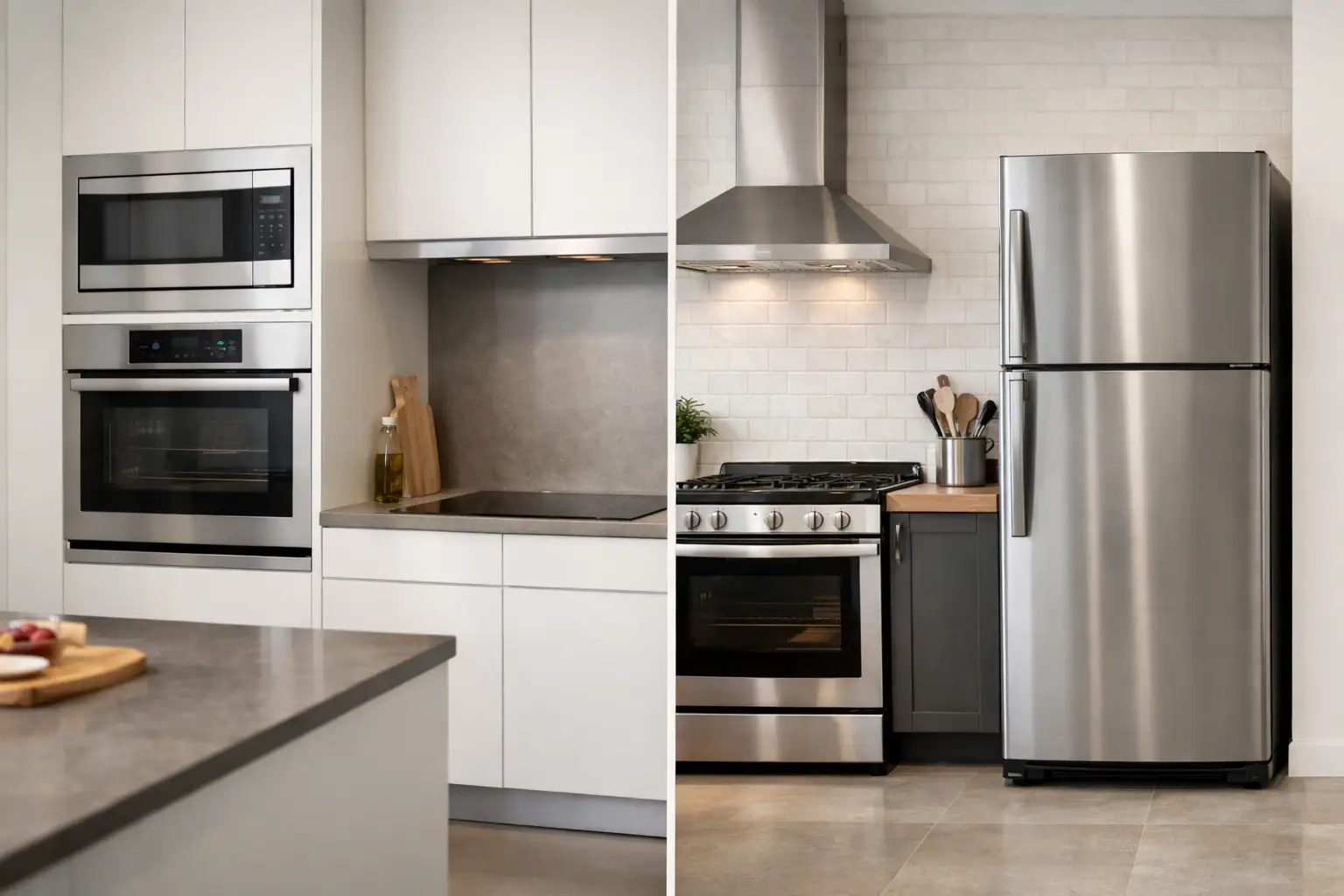
A beautiful kitchen can lose its impact when the appliances feel like an afterthought. That is why the choice between built in appliances vs freestanding units should happen early, while the layout, cabinetry, electrical points, and lifestyle requirements are still being shaped. The right answer is not simply about what looks more luxurious. It is about creating a kitchen that works effortlessly for the way you live.
For a sleek Dubai apartment, a family villa, or an investment property being renovated for resale, both options can be the right fit. The difference lies in how much design continuity, flexibility, budget control, and long-term planning your project requires.
What separates built-in and freestanding appliances?
Built-in appliances are designed to sit within custom cabinetry or dedicated appliance housings. Ovens, coffee machines, microwaves, dishwashers, refrigerators, wine coolers, and even washing machines can be integrated into the joinery so the kitchen reads as one considered composition. A panel-ready refrigerator or dishwasher can be fully concealed behind cabinet fronts, while a built-in oven becomes a deliberate feature within a tall unit.
Freestanding appliances are self-contained units that stand independently. Think of a range cooker, refrigerator, washing machine, or dishwasher that can be positioned in a prepared space and moved or replaced with less disruption. They remain visible and often make a stronger product statement through stainless steel, color, or professional-style detailing.
The distinction affects far more than appearance. It shapes your kitchen proportions, service access, ventilation strategy, joinery specifications, and renovation budget.
Built in appliances vs freestanding: the design difference
Built-in appliances create visual calm. Because appliances align with cabinetry, the kitchen can feel more architectural, particularly in open-plan homes where the kitchen is visible from the living or dining area. This matters in modern Dubai residences, where kitchens often form part of a larger entertaining space rather than sitting behind a closed door.
Integrated refrigeration and dishwashing are especially effective when the aim is a refined, furniture-like kitchen. Cabinetry can continue uninterrupted across the room, allowing stone, timber, lacquer, metal, or textured finishes to take center stage. A bank of built-in ovens can also be positioned at a comfortable height, creating both a polished focal point and a more ergonomic cooking experience.
Freestanding appliances introduce a different kind of character. A substantial range cooker can anchor a classic villa kitchen, while a statement refrigerator may suit an industrial, contemporary, or family-focused design. They are not inherently less premium. In fact, a high-quality freestanding appliance can bring an intentional, professional feel to the room when it is proportioned properly and supported by well-designed cabinetry.
The risk comes when a freestanding unit is treated as an afterthought. Gaps around the appliance, mismatched finishes, poorly placed sockets, or countertops that end awkwardly at its edge can make an otherwise elegant renovation feel unfinished. Good planning turns a visible appliance into a feature rather than a compromise.
Layout and space planning come first
A built-in kitchen demands precision. Appliance specifications must be confirmed before bespoke joinery is fabricated. Each unit needs the correct housing dimensions, required ventilation clearances, door-opening allowance, and access to water, drainage, and electrical services. Even a small mismatch can lead to costly adjustments later.
This level of coordination is one reason a design-and-build approach is valuable. The interior concept, technical drawings, joinery detailing, MEP requirements, and installation sequence need to work together. A refrigerator that appears perfectly centered in a 3D design still needs enough clearance for its doors to open without colliding with an island, wall, or adjacent tall cabinet.
Freestanding appliances offer more tolerance, but they still need thoughtful placement. A standard-width refrigerator may be easier to replace in the future, yet its depth can project beyond surrounding cabinets. A range cooker needs suitable extraction, heat-resistant finishes, and adequate worktop space on both sides. In compact apartment kitchens, these details decide whether the room feels easy to use or constantly cramped.
For either approach, prioritize the daily journey through the kitchen: unloading groceries, storing chilled items, preparing food, cooking, serving, and cleaning up. A beautiful kitchen should support these movements quietly, without forcing you to cross the room repeatedly or open competing doors in a narrow passage.
Cost: look beyond the appliance price
Freestanding appliances can appear more economical because their purchase and installation are often more straightforward. They do not always require custom housings, matching decorative panels, or specialized joinery modifications. They can be a sensible choice for rental properties, phased renovations, or projects where an existing appliance is still in excellent condition.
Built-in appliances usually involve higher upfront costs. The appliance itself may cost more, but the larger investment often sits around it: custom cabinetry, panels, ventilation components, precise electrical and plumbing preparation, and skilled installation. If an appliance changes size after the cabinetry is installed, the financial impact can be significant.
That said, a built-in scheme can deliver stronger value where the overall interior is being upgraded to a high standard. In a premium villa or a design-led apartment, a cohesive kitchen often supports the perceived quality of the entire home. The value is not only in the appliance but in the finished environment it helps create.
The most reliable way to control costs is to decide early where to invest. You might choose integrated refrigeration and a built-in dishwasher for visual continuity, then select a freestanding range cooker as a focal point. This hybrid approach can preserve the luxury feel while directing the budget toward the features you will use and appreciate most.
Maintenance, replacement, and practical access
Freestanding appliances generally win on replacement flexibility. If a refrigerator fails, it can usually be removed and replaced without altering surrounding cabinetry, provided the new model fits the opening and service points. This is useful for landlords and homeowners who want to keep future upgrades simple.
Built-in units require more planning when repairs or replacement are needed. A technician may need to remove a trim panel or carefully pull the appliance from its housing. If the model has been discontinued and a replacement has different dimensions, joinery adjustments may be necessary. This does not make built-in appliances impractical. It simply means quality installation, accessible service connections, and accurate appliance records matter from day one.
In the UAE, heat also deserves attention. Refrigeration units work hard, particularly in homes with active kitchens and high ambient temperatures. Correct ventilation around built-in refrigerators is essential for performance and longevity. Similarly, cooking appliances and hoods should be selected and installed with the kitchen’s cooking habits in mind. A household that regularly prepares aromatic or high-heat meals needs extraction that performs, not merely a hood that looks good in a showroom.
Which option suits your home?
Choose built-in appliances when your priority is a tailored, visually unified kitchen; when you are investing in bespoke joinery; and when you want the kitchen to feel connected to the wider interior design. They work especially well in open-plan residences, minimalist interiors, and luxury renovations where every line and finish has been considered.
Choose freestanding appliances when flexibility, straightforward replacement, and a lower initial fit-out cost are more important. They can also be the better choice when a statement range cooker or premium visible refrigerator suits the design direction. For investment properties, they may simplify future maintenance without sacrificing a polished result.
A hybrid kitchen is often the most intelligent answer. Concealed dishwashers, integrated refrigeration, and built-in ovens can provide clean architectural lines, while a freestanding cooker adds personality and practical cooking capacity. The result feels curated rather than overly uniform.
Questions to settle before finalizing the kitchen design
Before cabinetry drawings are approved, confirm the appliance brand and exact model numbers, not just general categories. Ask how each appliance will ventilate, where its isolation switch or water connection will sit, and how it can be removed for servicing. Consider door swings, handle projections, and whether a tall oven unit will be comfortable for every person using the kitchen.
Also think beyond the handover day. Are you likely to replace appliances within five to seven years? Will your household grow? Do you entertain frequently? Are you designing for personal enjoyment, rental appeal, or resale? These questions bring clarity to decisions that can otherwise feel purely aesthetic.
The best kitchen is not defined by whether every appliance disappears behind cabinetry or stands proudly in view. It is defined by the confidence of every choice: a layout that flows, materials that endure, appliances that suit your habits, and joinery crafted around real life. When vision meets technical planning, the kitchen becomes more than a room to cook in. It becomes a living work of art that serves you beautifully every day.




Customer Reviews
[…] kitchens, think through preparation, cooking, cleaning, and serving zones. Confirm appliance locations early, especially if they affect electrical loads, ventilation, water lines, or cabinetry dimensions. In […]