
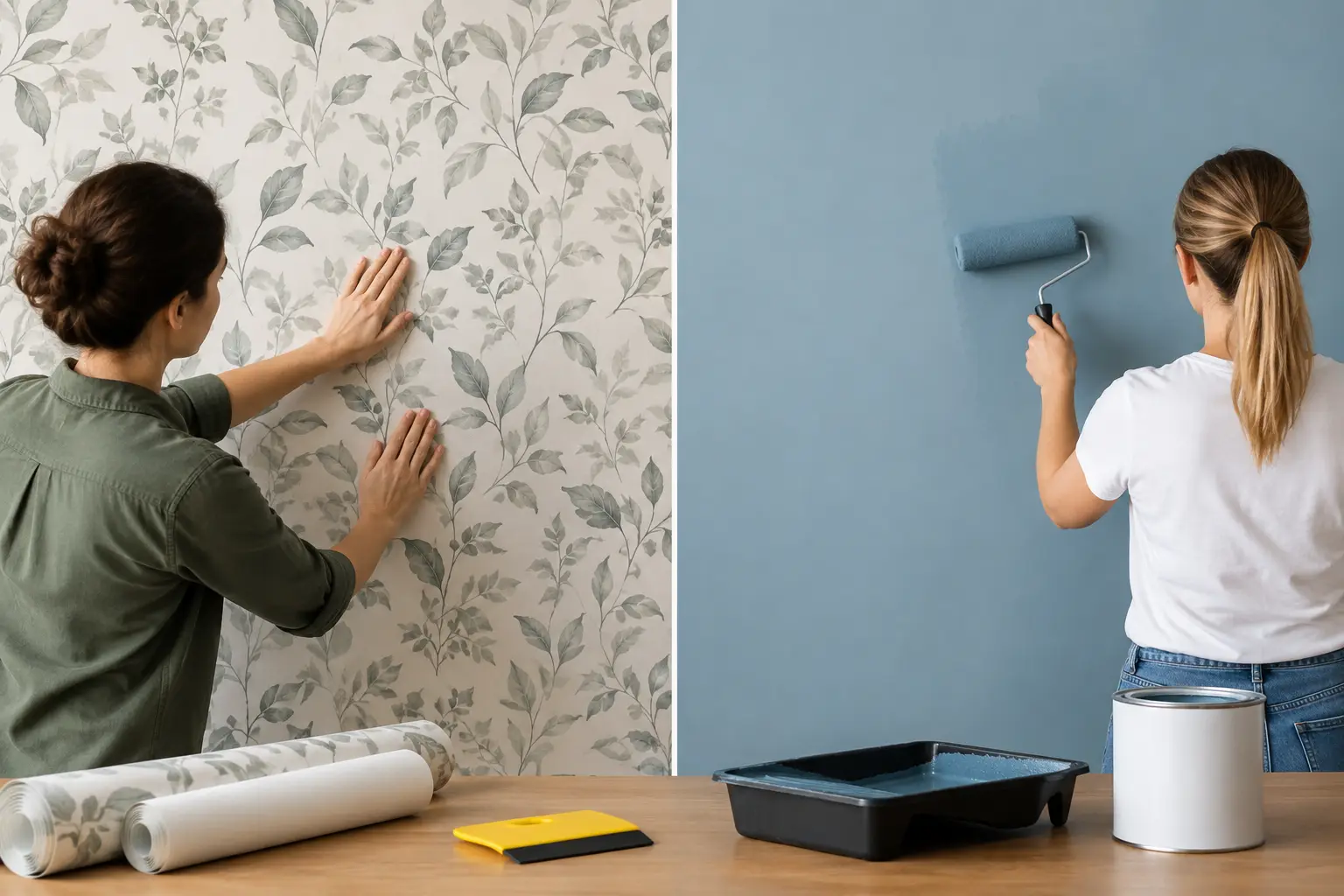
A feature wall can either make a room feel intentionally composed or leave it looking like an afterthought. That is why the choice of wallpaper versus decorative paint deserves more consideration than a quick color sample or an online mood board. Both can create drama, depth, and a distinctly personal finish, but they behave very differently once they are installed, lived with, cleaned, and lit throughout the day.
For a luxury villa, apartment, retail setting, or office, the best choice is rarely about which option is universally better. It is about what the wall needs to do for the space: create a focal point, soften acoustics, add texture, withstand daily use, or support a broader interior concept. The strongest results come when the finish is selected alongside lighting, joinery, furniture, and circulation, not as a final decorative decision.
Wallpaper Versus Decorative Paint: The Visual Difference
Wallpaper brings pattern, repeat, and material character that paint cannot always replicate. A hand-painted botanical design, tailored grasscloth, metallic geometric print, or fine linen-effect paper gives a wall visual layers from the moment someone enters the room. It can turn a quiet powder room, bedroom backdrop, reception area, or dining niche into a living work of art.
Decorative paint is more expressive than standard flat paint. Techniques such as limewash, Venetian plaster, polished plaster, concrete effects, metallic finishes, and textured coatings create movement that feels organic rather than printed. The surface may appear soft and cloud-like in daylight, then take on shadow and sheen after evening lighting is switched on. This makes decorative paint especially compelling in contemporary interiors where the goal is depth without a recognizable motif.
The distinction comes down to precision versus variation. Wallpaper presents a deliberate design language, with a pattern that can be bold, formal, playful, or quietly elegant. Decorative paint creates tonal variation and tactile character, often with a more architectural feel. If the room already contains highly figured stone, patterned rugs, or statement upholstery, a subtle plaster finish may provide balance. If the furniture and architecture are restrained, wallpaper can supply the defining personality.
Consider the Room Before Choosing the Finish
A wall finish should respond to how a room is used, not only how it appears in a sample. In a primary bedroom, wallpaper behind the bed can create a framed, intimate backdrop without demanding attention from every surface. A soft textured decorative paint may be better for all four walls when the intention is calm, warmth, and a sense of spaciousness.
Living rooms allow more freedom, but scale matters. Large-format wallpaper can give a high ceiling or double-height wall real presence, while decorative plaster can prevent a large expanse from feeling cold or empty. On a television wall, consider glare and maintenance as carefully as appearance. Highly reflective paints and delicate raised wallpapers may not suit a wall that is frequently touched, cleaned, or viewed under strong downlights.
For commercial interiors, the decision is also tied to brand expression and foot traffic. A hospitality venue may use wallpaper to create an instantly recognizable moment at its entrance or in a private dining area. An office reception can benefit from a polished plaster finish that looks refined while remaining visually calm behind a company logo. In high-contact corridors, meeting rooms, and retail environments, durability and repairability should lead the conversation.
In Dubai, sunlight is another practical consideration. Strong natural light can reveal imperfections, amplify sheen, and change the perceived tone of both wallpapers and paints. Reviewing large samples on the actual wall, at different times of day, is far more reliable than choosing under showroom lighting alone.
Cost Is More Than the Price per Square Foot
Wallpaper can range from accessible vinyls to premium designer collections, natural fibers, murals, and custom-printed finishes. The material price is only one part of the investment. Proper wall preparation, lining, pattern matching, careful cutting around switches and joinery, and skilled installation all influence the final cost. Complex patterns and natural wallcoverings typically require more time and create more material waste.
Decorative paint also has a wide price range. A basic textured coating may be economical, while authentic Venetian plaster or multi-layer metallic effects require specialist application and intensive preparation. The look depends heavily on the applicator’s technique. Two walls finished with the same product can look entirely different when workmanship is inconsistent.
It is tempting to compare both options only by the initial quote, but that can lead to false savings. A lower-priced wallpaper installed over poorly prepared walls may lift at seams or show every uneven area. A decorative finish applied without the correct primer, drying time, or protective coat can stain, crack, or lose its intended effect. Quality control at the preparation stage protects the visual result and the budget later.
Durability, Cleaning, and Repair
Neither wallpaper nor decorative paint is maintenance-free, but each handles damage differently. Washable vinyl wallpaper is practical for active family areas, children’s rooms, and many commercial applications. It resists light cleaning and is available in a wide variety of convincing textures. By contrast, delicate silk, grasscloth, and some handmade papers are better reserved for lower-contact spaces. They offer exceptional beauty, but they are not designed for frequent wiping or exposure to moisture.
Decorative paint can be durable when specified correctly. Some plaster systems and specialist coatings are hard-wearing and can be sealed for greater stain resistance. Yet many finishes are intentionally nuanced, which means a spot repair may show if the new application does not blend seamlessly with the surrounding wall. This is particularly true with limewash and hand-troweled plaster, where the charm lies in natural irregularity.
Wallpaper repairs can be simpler when spare rolls are retained after installation. A damaged panel may be replaced, although dye lots, sun exposure, and pattern alignment must be considered. For either finish, keeping product details, batch references, and a record of the technique used is a small but valuable step. It gives future maintenance work a clear starting point.
How Lighting Changes the Decision
Lighting does not merely reveal a decorative finish. It actively shapes it. Wallpaper with metallic threads or pearlescent ink can look restrained in daytime and luminous at night. A dark paper in a room with poor lighting, however, can absorb more light than expected and make the space feel enclosed.
Decorative paint is often at its best under layered lighting. Wall washers can bring out the depth of plaster, while warm accent lighting enhances mineral textures and subtle sheen. The wrong lighting can also expose lap marks, uneven texture, or unwanted glare. This is why finish samples should be assessed beside the planned lighting temperature, not in isolation.
A coordinated interior plan considers the wall finish and the illumination together. Cove lighting, sconces, spotlights, and natural light direction all influence whether a surface reads as understated, dramatic, or overly busy.
When Wallpaper Is the Better Choice
Choose wallpaper when the room needs a clear visual story. It is particularly effective for feature walls, boutique bedrooms, powder rooms, lounges, private offices, and customer-facing spaces where a memorable first impression matters. It is also the stronger choice when the design calls for a specific pattern, mural, woven texture, or graphic identity that paint cannot reproduce with the same consistency.
Wallpaper works best when the wall is stable, dry, carefully prepared, and unlikely to face heavy abrasion. It rewards precise installation and thoughtful scale selection. A small-scale print on a large wall can feel restless, while an oversized pattern in a compact room may become overwhelming unless the rest of the scheme is deliberately quiet.
When Decorative Paint Is the Better Choice
Choose decorative paint when you want texture without repetition. It can make a modern interior feel more layered, soften the sharpness of contemporary architecture, and add character to expansive walls. It is especially suited to spaces centered on stone, timber, bespoke joinery, and sculptural furniture, where the wall should support the composition rather than compete with it.
It can also be a sensible option for curved walls, complex architectural details, and areas where a continuous finish is preferable to wallpaper seams. The key is engaging a skilled team that can prepare the substrate correctly and produce sample boards that reflect the intended final result.
A More Considered Way to Decide
Start with the emotion you want the room to create, then test the practical demands. Ask whether the wall is a focal point or a backdrop, whether it will receive frequent contact, how it is lit, and what materials sit beside it. A rich wallpaper may be perfect behind a dining table, while the adjoining walls benefit from a quiet plaster finish that lets the space breathe.
The most refined interiors do not treat wallpaper and decorative paint as competing camps. They use each where it performs best. Aakruti Technical Services Co. approaches finishes as part of a complete design-and-build vision, coordinating samples, lighting, surfaces, craftsmanship, and installation so the final handover feels as considered as the original concept.
Before committing, view full-scale samples in your own space and live with them for a day. The right finish is the one that still feels exceptional after the sunlight shifts, the lights come on, and the room begins to be used as it was meant to be.